
Let’s do more for invertebrates
Day 7 #30DaysWild
The latest data from the Buglife charity show that the number of flying insects sampled on vehicle number plates across the UK has fallen by a staggering 59% in just 5 years.
Invertebrates need our help.
We’re managing our garden to give invertebrates maximum chance to succeed.
It feels as though we’re heading in the right direction. We’ve caught (and released to go on their way) 301 macro moth species in the garden since we began keeping records.
108 moths of 39 species last night. It was perhaps a little too showery..?
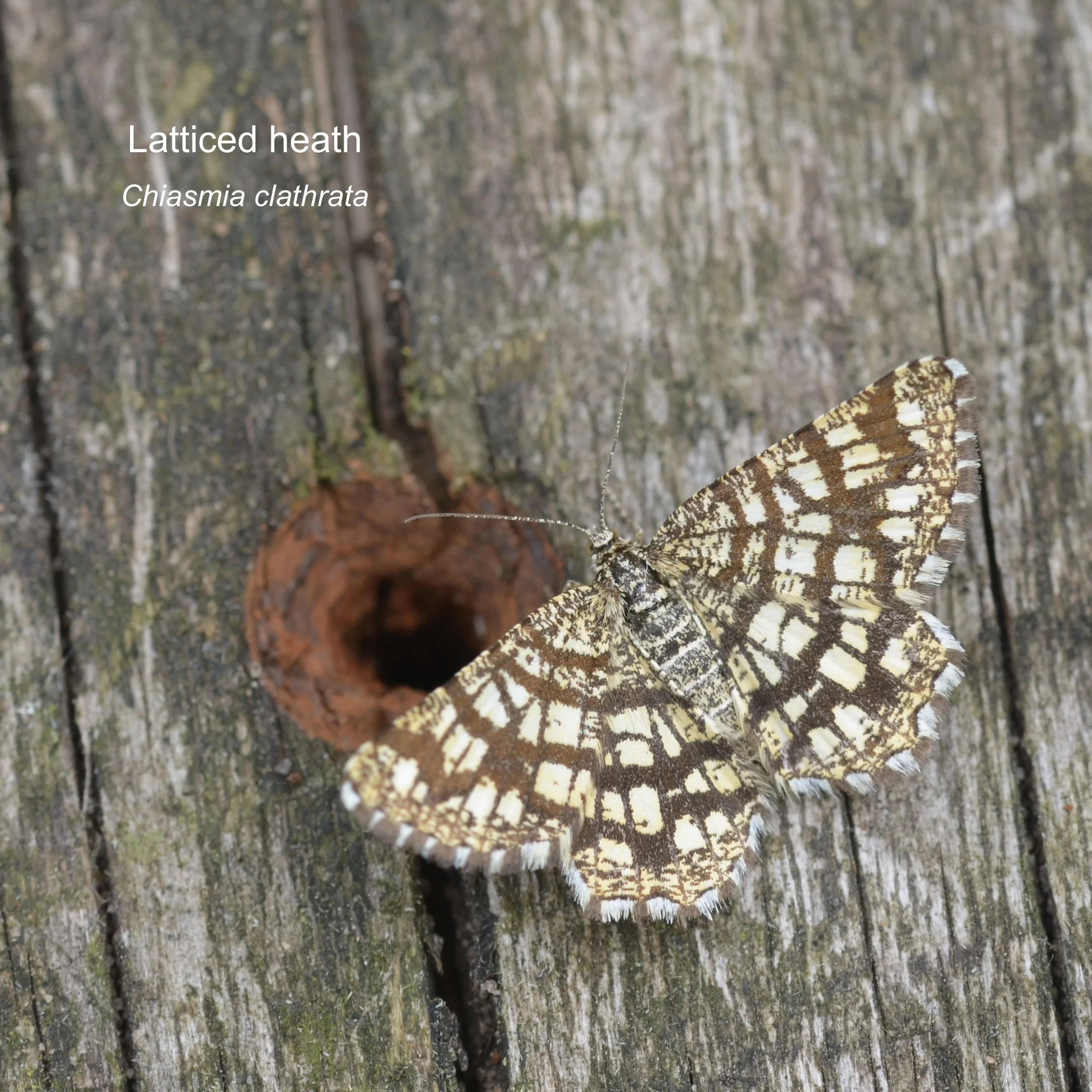
Latticed heath
Delicately marked.
This afternoon, a pretty little latticed heath moth over the unmown lawn. We have plenty of the bedstraws, trefoils and clovers that their caterpillars will need.
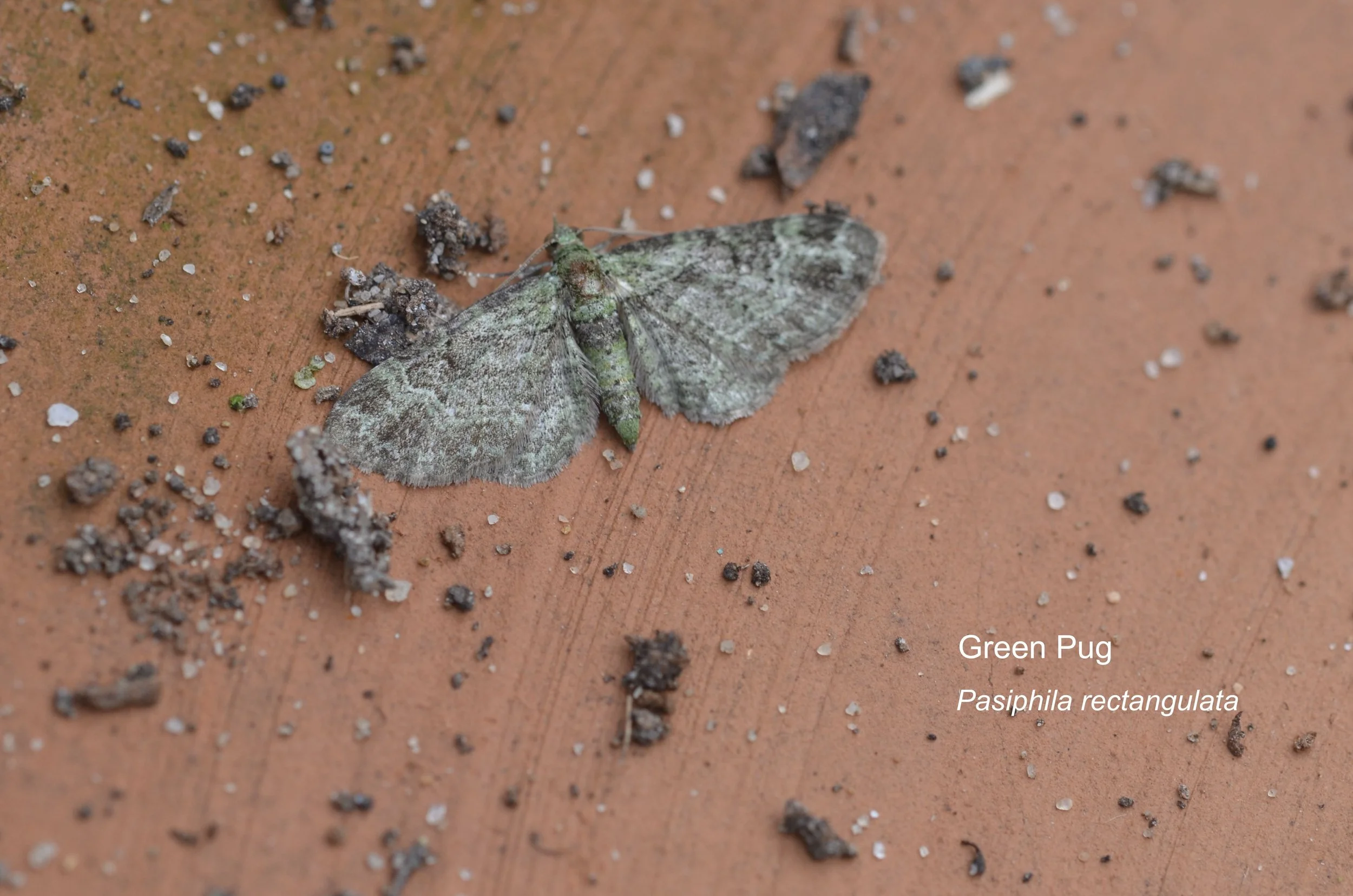
The tiny green pug.
Not much wider than 1 cm.
Even tinier is the green pug caught last night. The food needs of its caterpillars are well-met here as we have apple, blackthorn, cherry, hawthorn, pear and quince.
The caterpillars of the snout feed on nettles as do many butterflies. Its ’snout’ isnt a proboscis but, in profile, appears to be an eccentric hat.
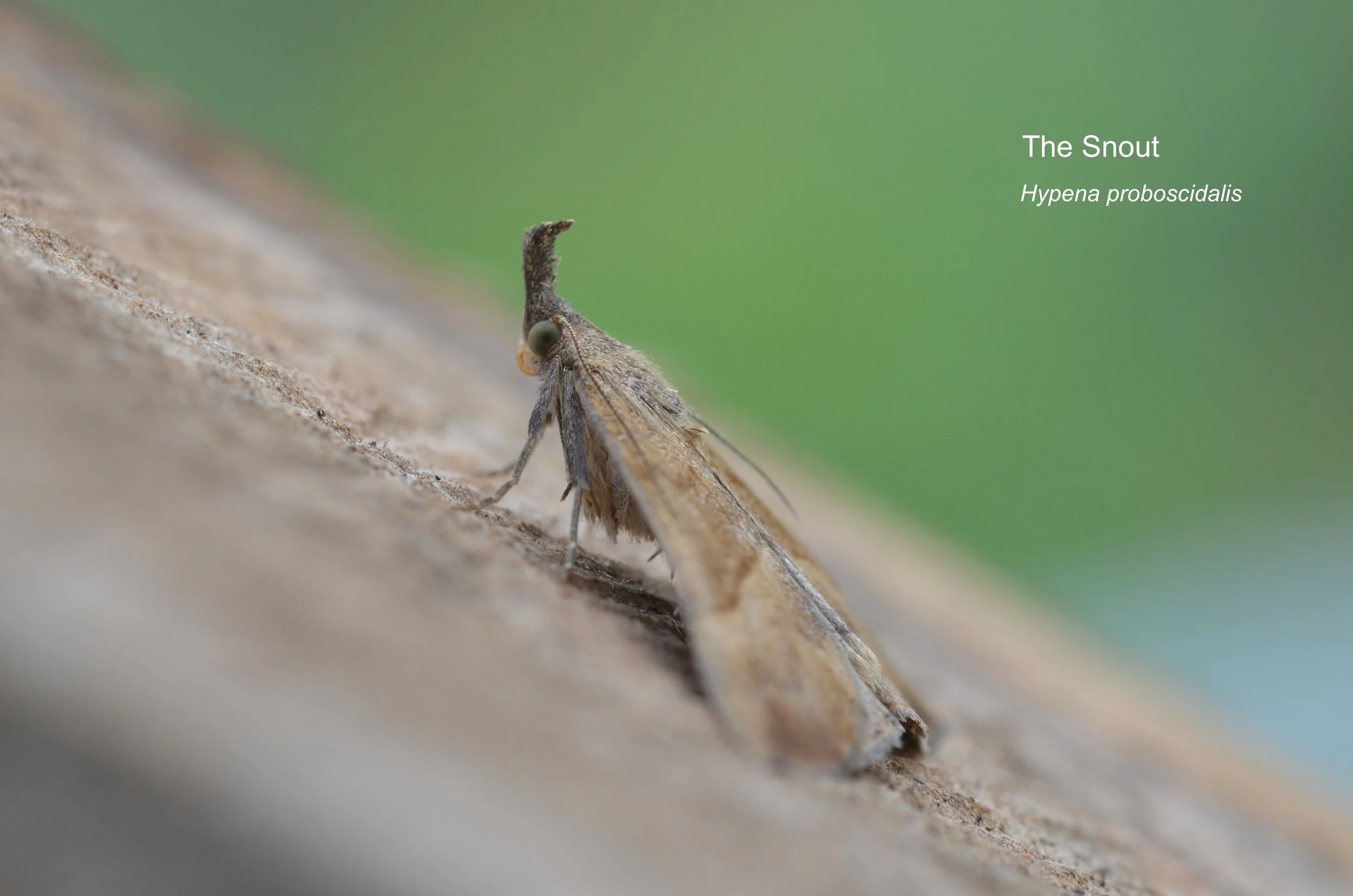
the snout moth
Am I alone in seeing some native South American hat influence here..?
Poplar hawk-moths are common and one visited the light last night. Their caterpillars feed on willow, apple, tomato, birch and oak - all of which grow here.
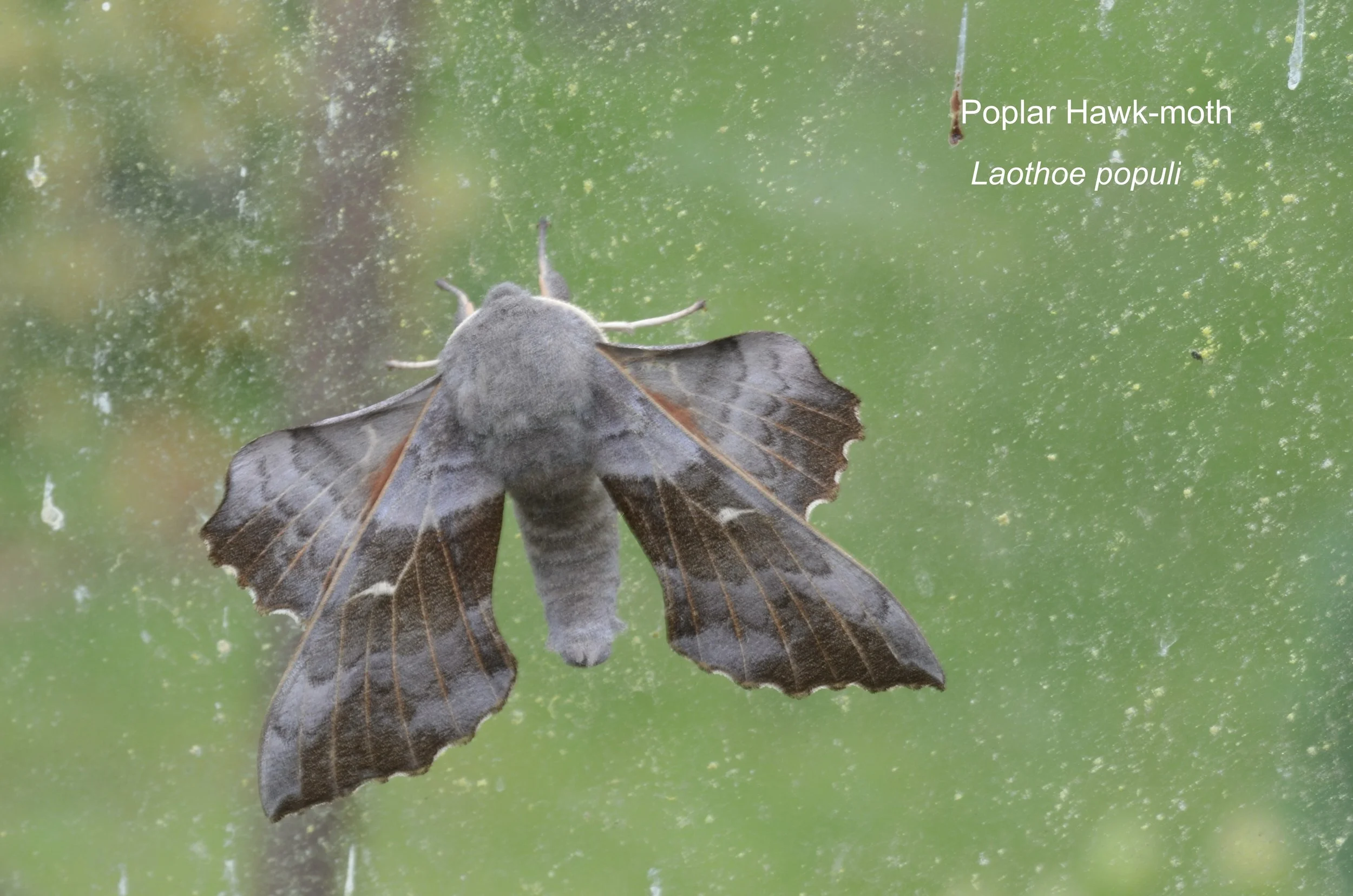
One of our larger moths - always welcomed when they join us at the night light.
I sometimes leave the merlin app running when I’m working in the garden. This app identifies bird songs and calls - not always with 100% accuracy. The app recently suggested spotted flycatcher had been calling in the garden. I’d love to think that this was true but their numbers have crashed over recent years. Probably insufficient invertebrate food?
Let’s do more for invertebrates..