
Crimson king!
When we review the state of Nottinghamshire nature in 2026 there’ll undoubtedly be losers - especially as a consequence of the heat and drought. Fire too will have been calamitous for some species and sites..
I wonder though whether Lepidoptera (moths & butterflies) will record some winners?
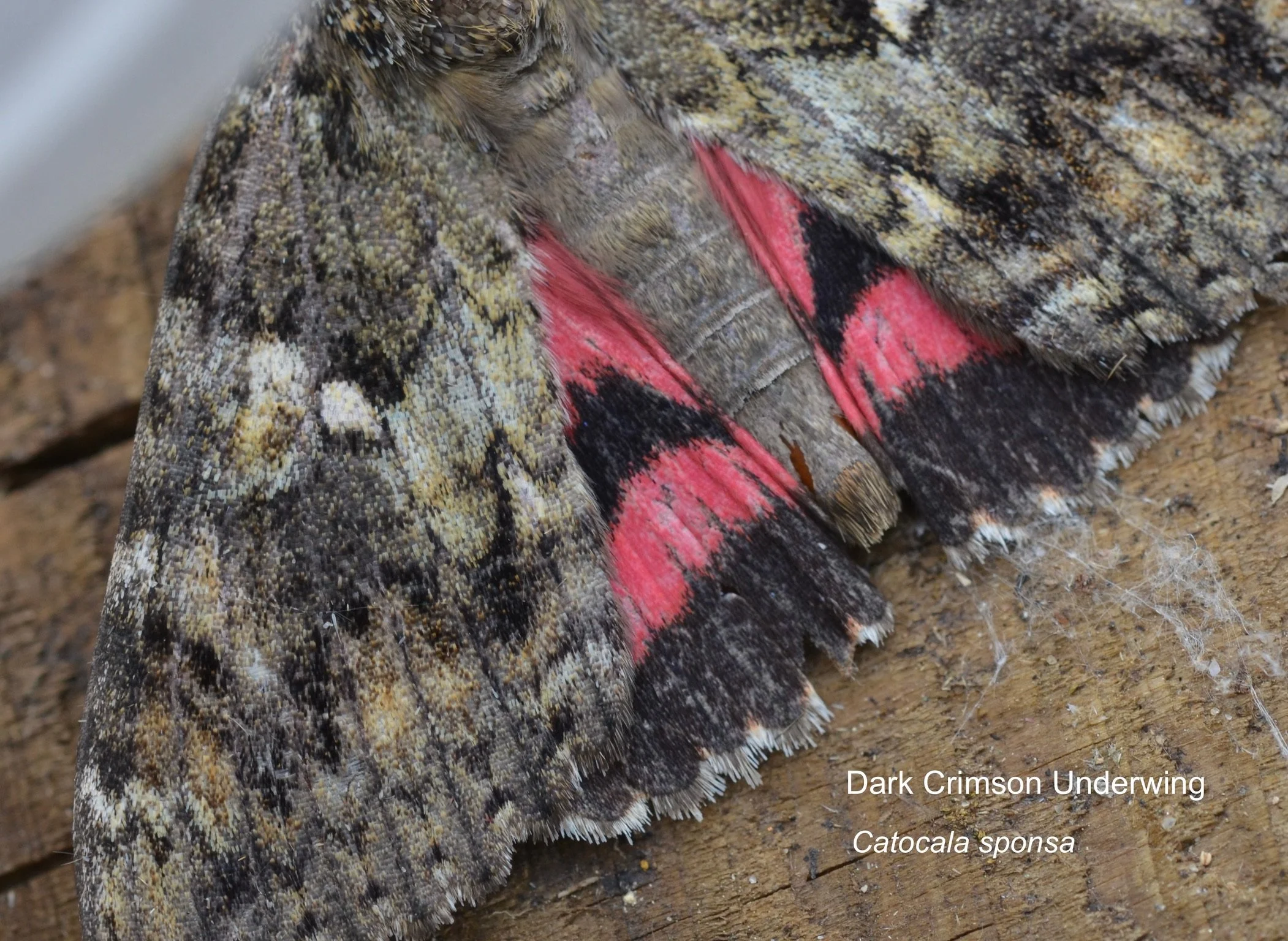
Dark Crimson Underwing in close-up..
Yesterday we dived once again into the nocturnal world as we set-up our trusty moth light deep in our cedar walk which resulted in a notable catch of over 400 macro moths of thirty seven species.
There were two species not recorded here before 2024 and both migrants probably carried north by the extreme temperatures?
We have noted the small mottled willow earlier in the summer but went from having no garden records since we began recording here in 2012 to having such an abundance last night that we simply couldn’t count them. Setaceous Hebrew Character (what a name!) was abundant with 89 moths noted but small mottled willow eclipsed that. This is not a moth of striking appearance and possibly considered an agricultural pest.
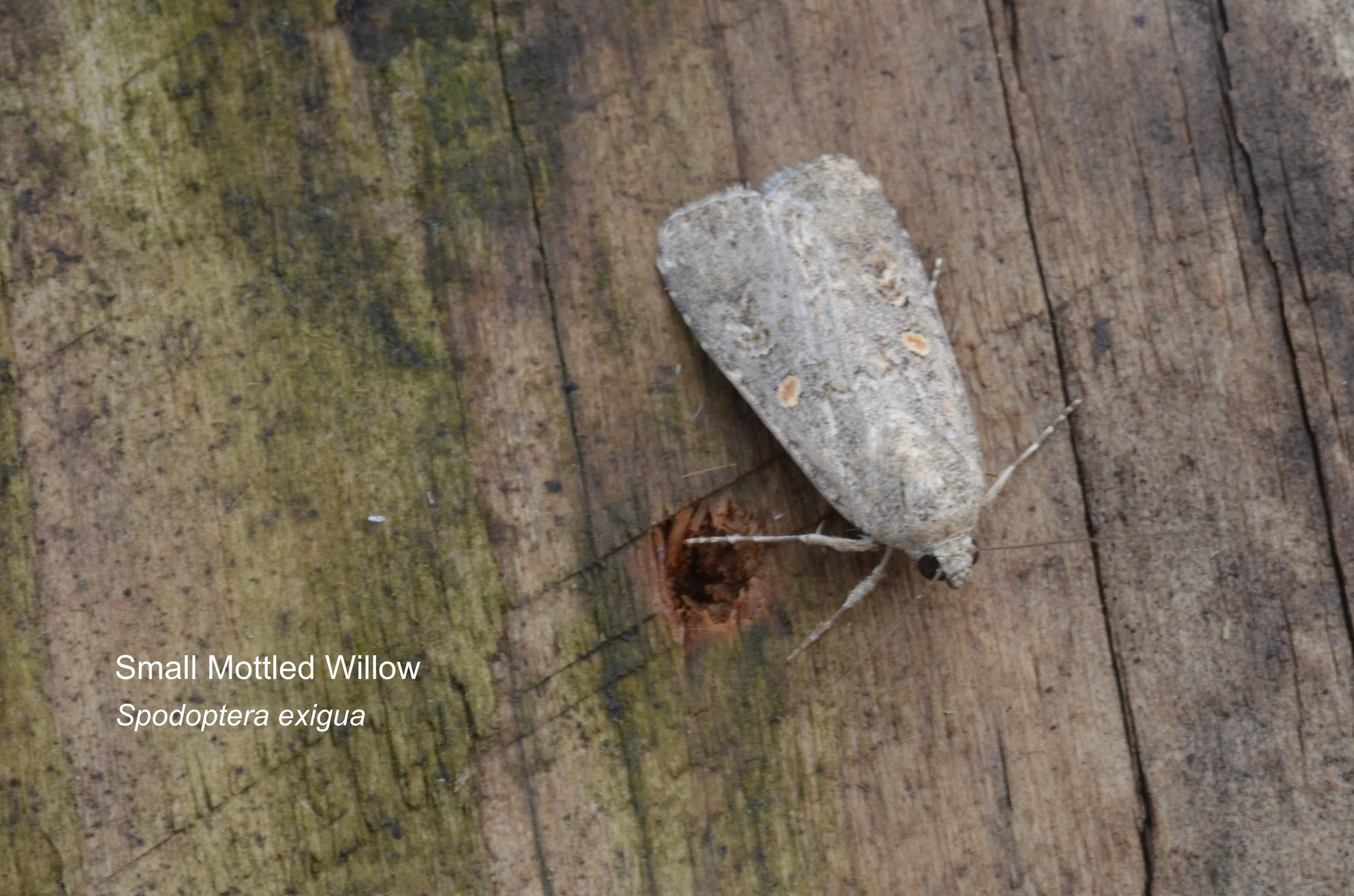
Small mottled willow
Has arrived in large numbers
Their sheer numbers may have proved a valuable food source as I watched a robin and a wren busily hunting through the brambles in our cedar walk in the area where the moth light had been sited. Our bat population may have benefited too.
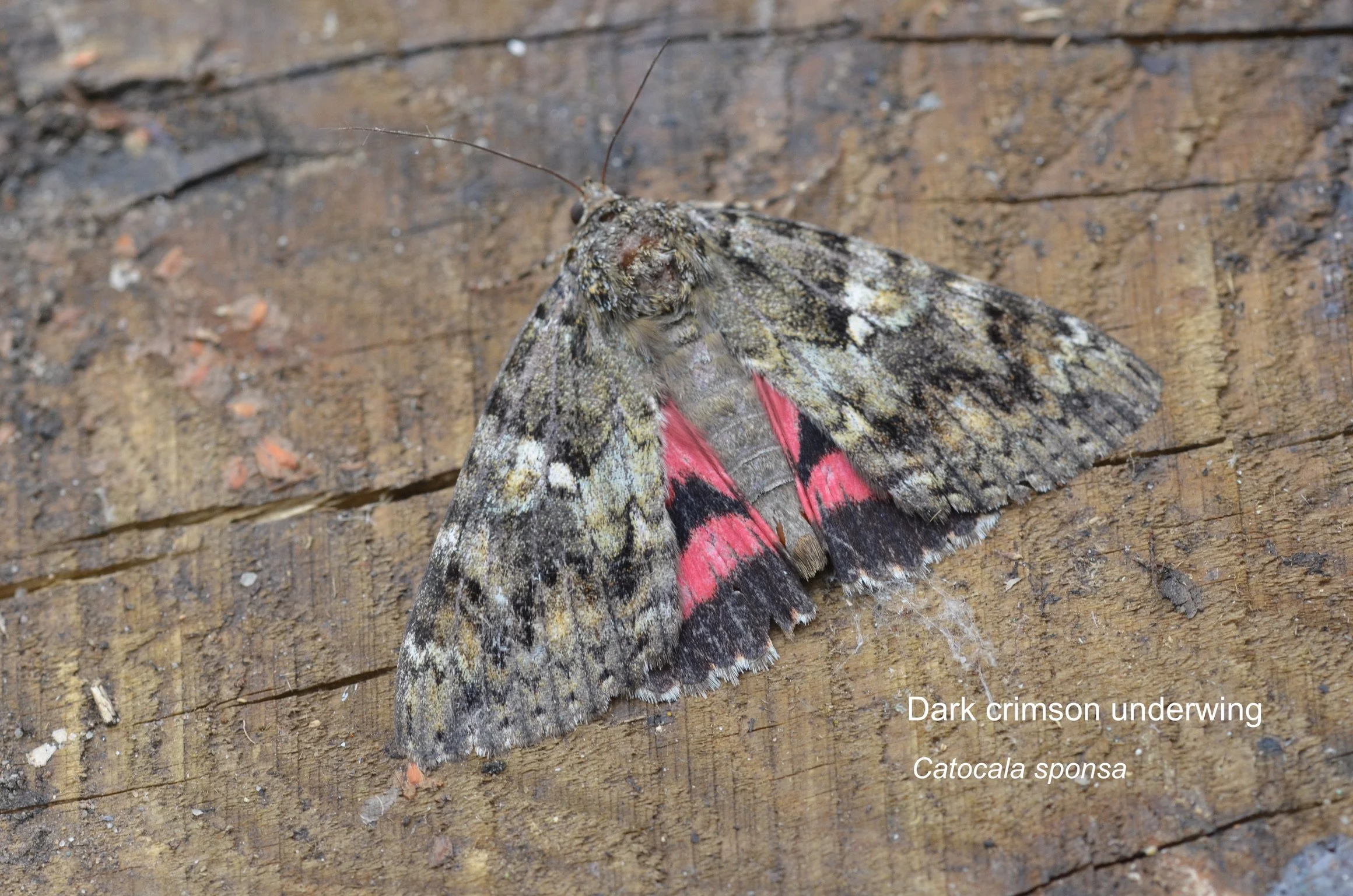
A big beauty!
The second notable immigrant of the night had star quality - a big dark crimson underwing. A large, substantial beauty. According to UK moths it is ‘a rare species, classed as Red Data Book category RDB3’.
Very much ‘the cherry on the cake’ for us after we’d slogged through 400 moths and one we won’t forget in a hurry.