
Bat surveying..
What a privilege to share our garden with bat enthusiasts today. Almost all were working towards achieving the stringent ‘bat licence’ and wore face masks and regulation gloves when close to the animals to both prevent disease spreading to bats from humans and vice-verse.
Training included safe use of ladders, opening of bat boxes and handling bats.
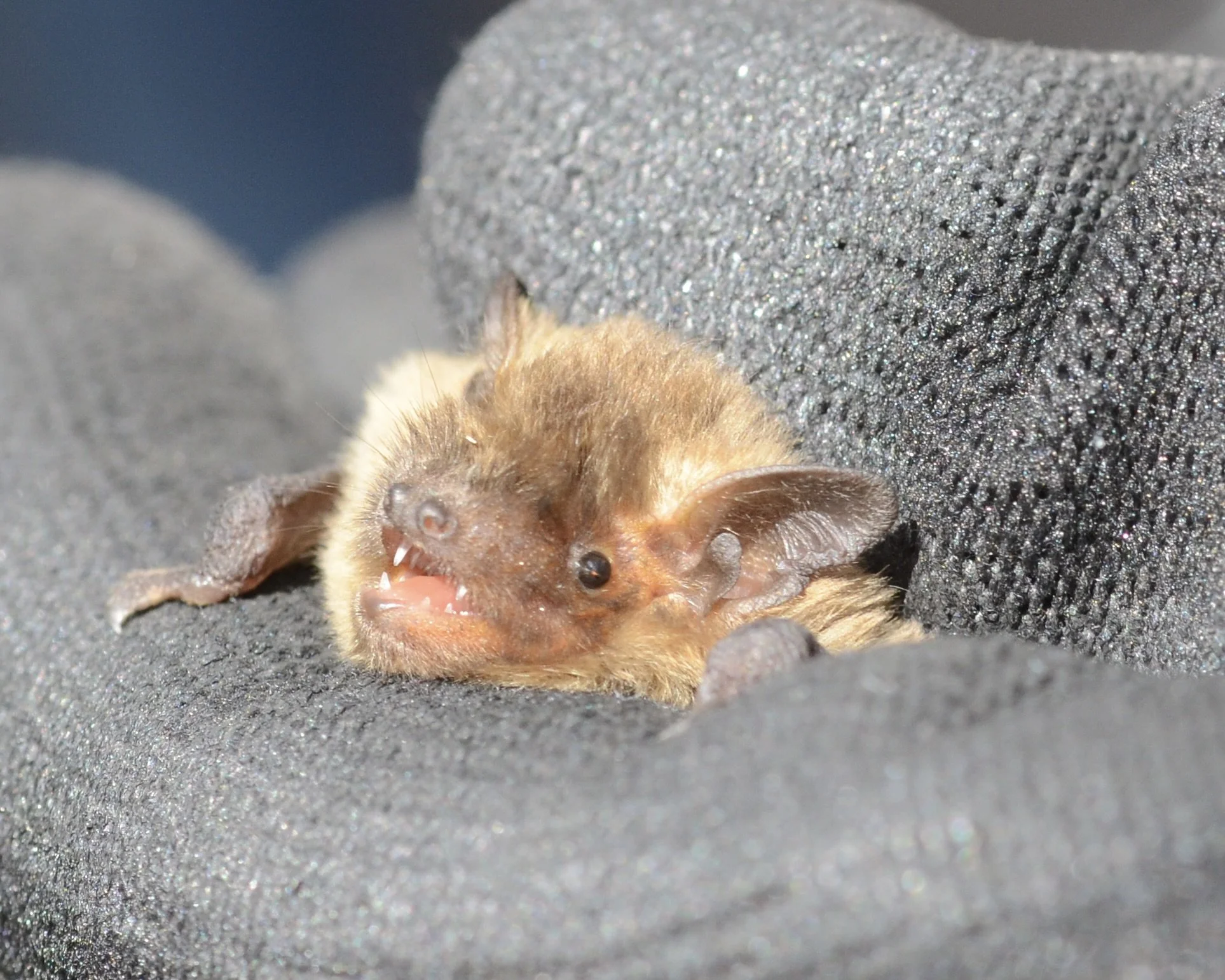
Soprano pipistrelle
Held carefully during surveying
Ten of us took part in the survey and checked eighteen bat boxes. all results were meticulously recorded.
We discovered evidence of bats in five boxes (faeces).
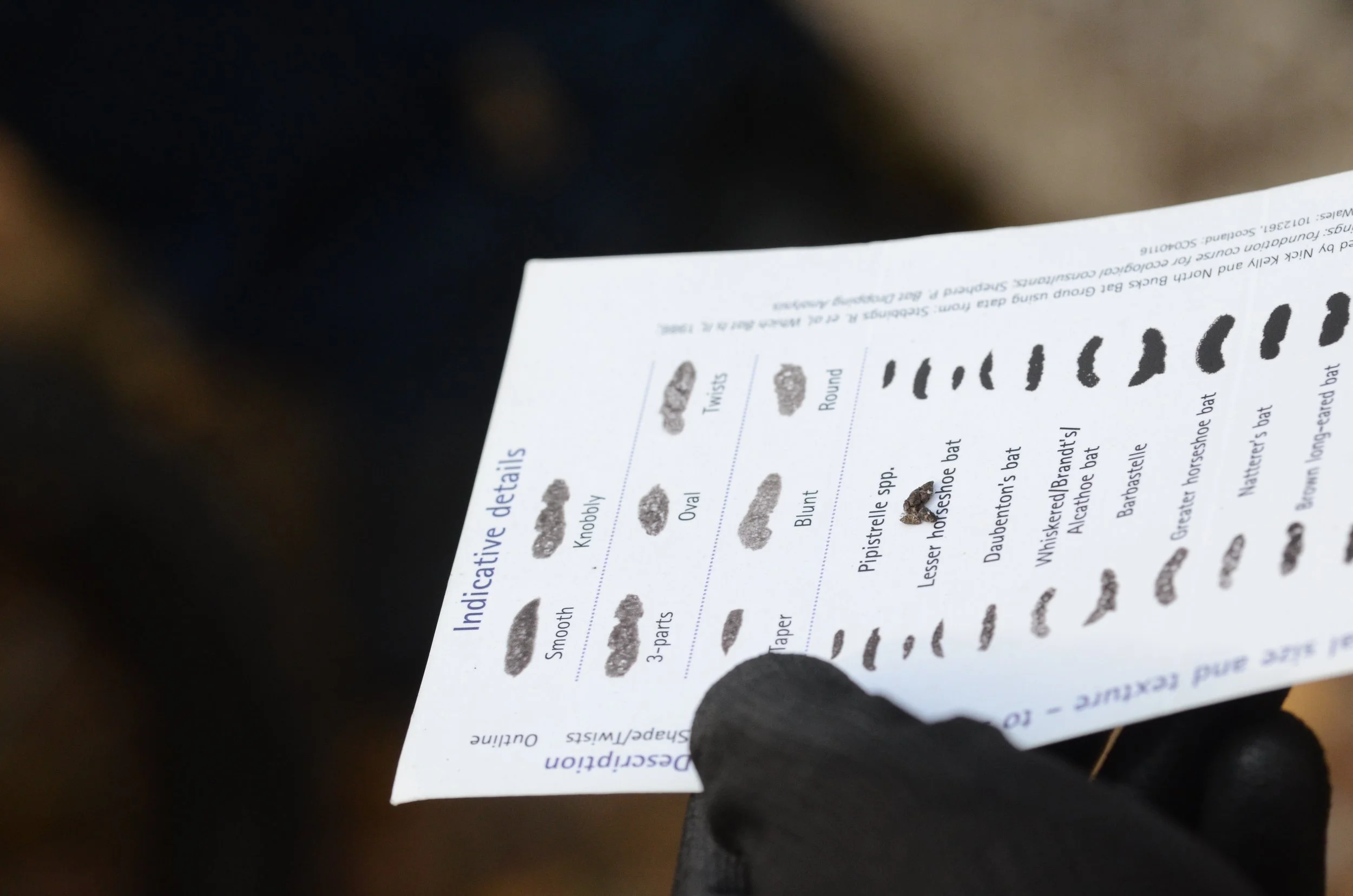
Faeces ID
Not the most-glamorous part of the work but important evidence.
We also found six female soprano pipistrelles and one male in one box. This is our most-successful box as we had had eveidence of brown long-eared bats in this one in October 2025.
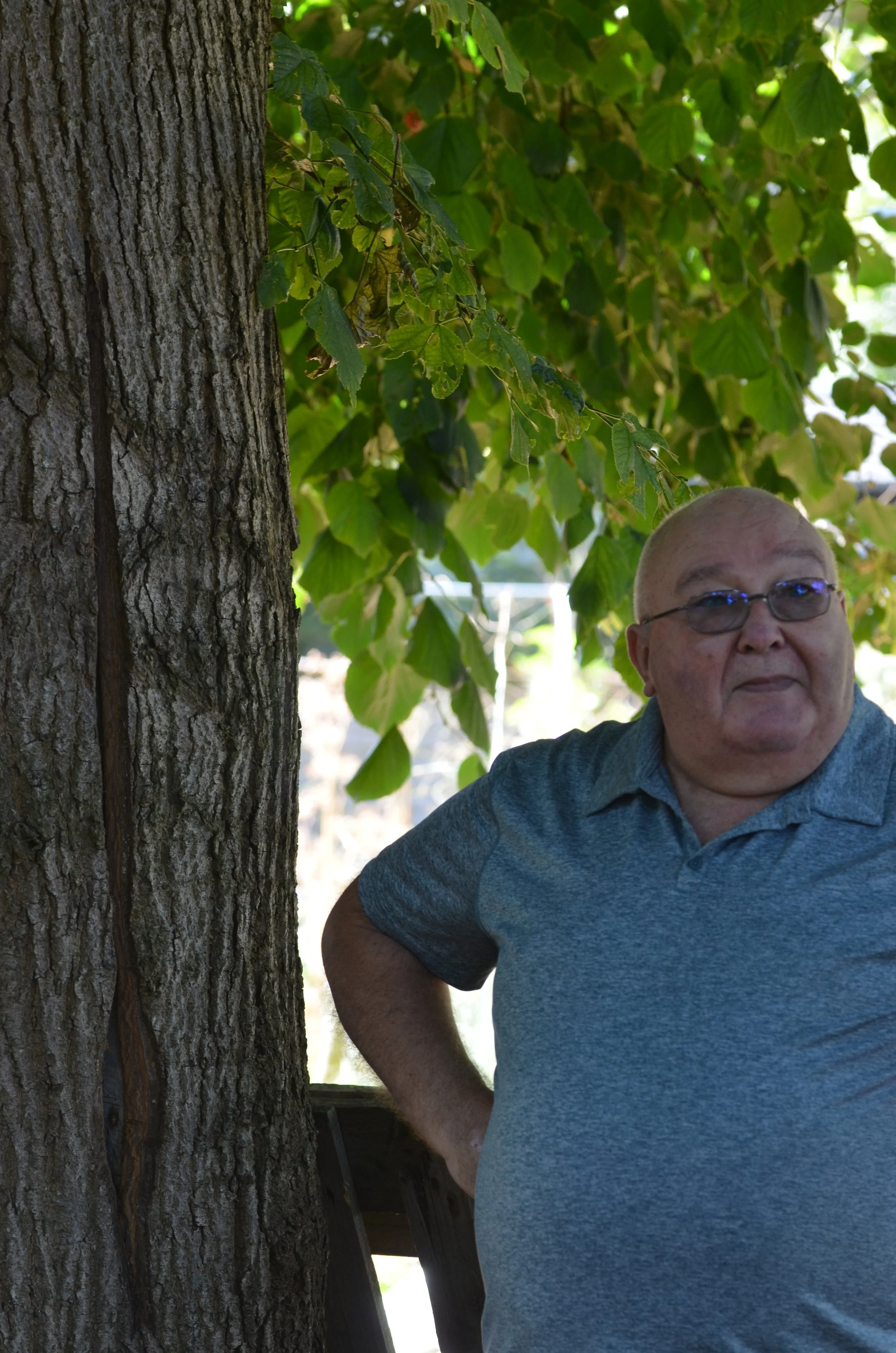
Feature created in lime tree
John Parker, Notts Bat Group chair talking about why we need to ‘veteranise’ trees..
It was interesting too to monitor the progress of the tree veteranisation features created in our trees by the bat group last year. Lime and oak were the best advanced. Sycamore and sweet chestnut showed little sign of creating ‘ramshorns’ of repairing tissue. Non-deciduous trees were deemed to be least successful due to the deposits of resin. Features had been colonised by invertebrates but not so far by bats.
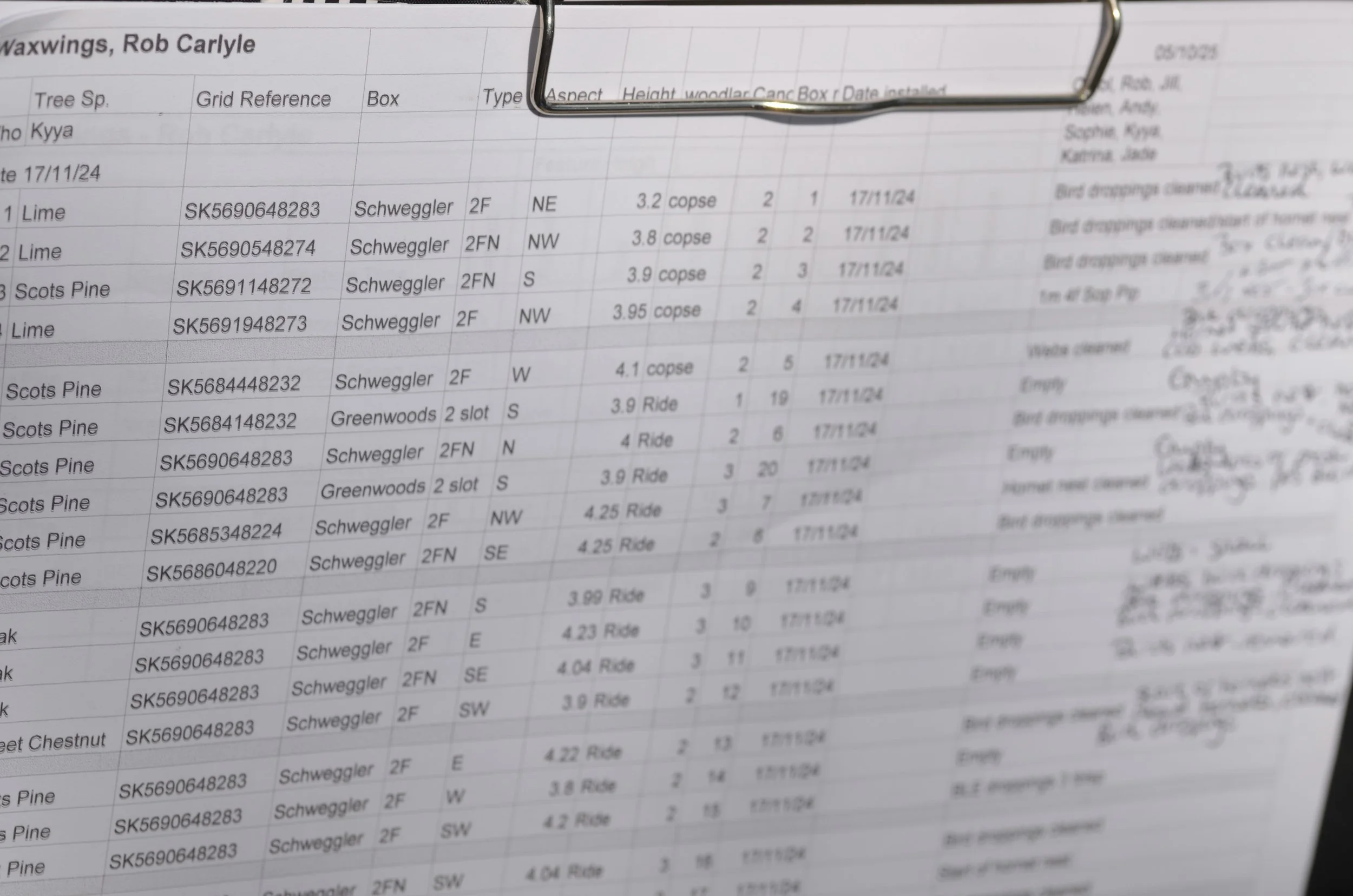
Records
A vital part of the monitoring work.
John took away three static detectors and will report back on results.
We finished with lunch together
And special thanks to John Parker, once again, for leading.
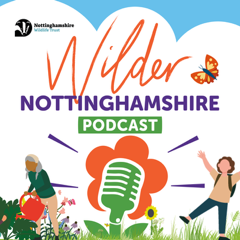
Featuring John!
This is the podcast featuring John. ‘Bats & The Nottinghamshire Bat Group - Episode 2 Wilder Nottinghamshire Podcast’ on Podbean, check it out! https://www.podbean.com/ei/pb-6pj4u-1b2ffe9