
Bioblitz!
Over a day and an evening we set about discovering just what is in the garden with a team of enthusiast experts.
245 was the total and this is included below.
Cordwood Bioblitz Sunday July 19th 2026.
Mammals:
Field Vole
Muntjac (Faecal evidence)
Grey squirrel
Birds:
Long tailed tit
Blue tit
Great tit
Coal tit
Blackcap
Whitethroat
Chiffchaff
Goldcrest
GS Woodpecker
Green Woodpecker
Nuthatch
Robin
Wren
Blackbird
Dunnock
Song thrush
Stock Dove
Wood pigeon
Carrion Crow
Kestrel
Sparrowhawk
Buzzard
Swift
Swallow
Pied wagtail
Goldfinch
Hymenoptera (narrow waisted}
Ants:
Silky ant
Red ant spp
Black ant spp
Bees, Hornets and Wasps:
Common carder bee
Buff tailed Bumble bee
White tailed Bumble bee
Red tailed Bumble bee
Honey Bee
Garden Bumble bee
Forest Cuckoo bee
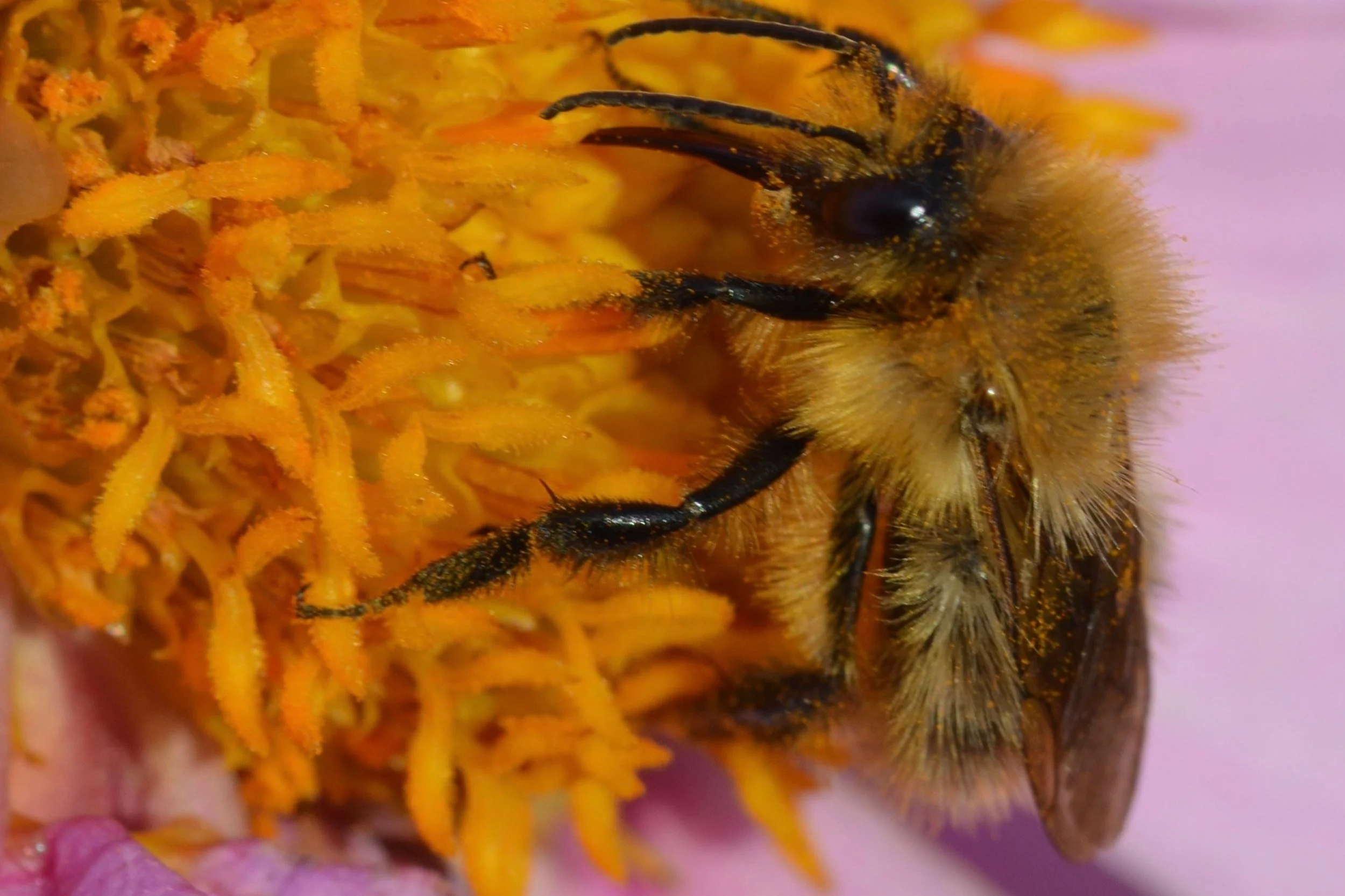
Common carder bee
One of several species of bumblebee noted.
European Hornet
Parasitic wasp (Ichneumon spp)
Tiphia femorata (beetle killing wasp)
Vespula vulgaris (Common wasp)
Symphyta: (Sawflies)
Turnip sawfly
Selandria serva
Lepidoptera:
Butterflies:
Large white
Small white
Green veined white
Small copper
Brown Argus
Common Blue
Gatekeeper
Meadow brown
Painted lady
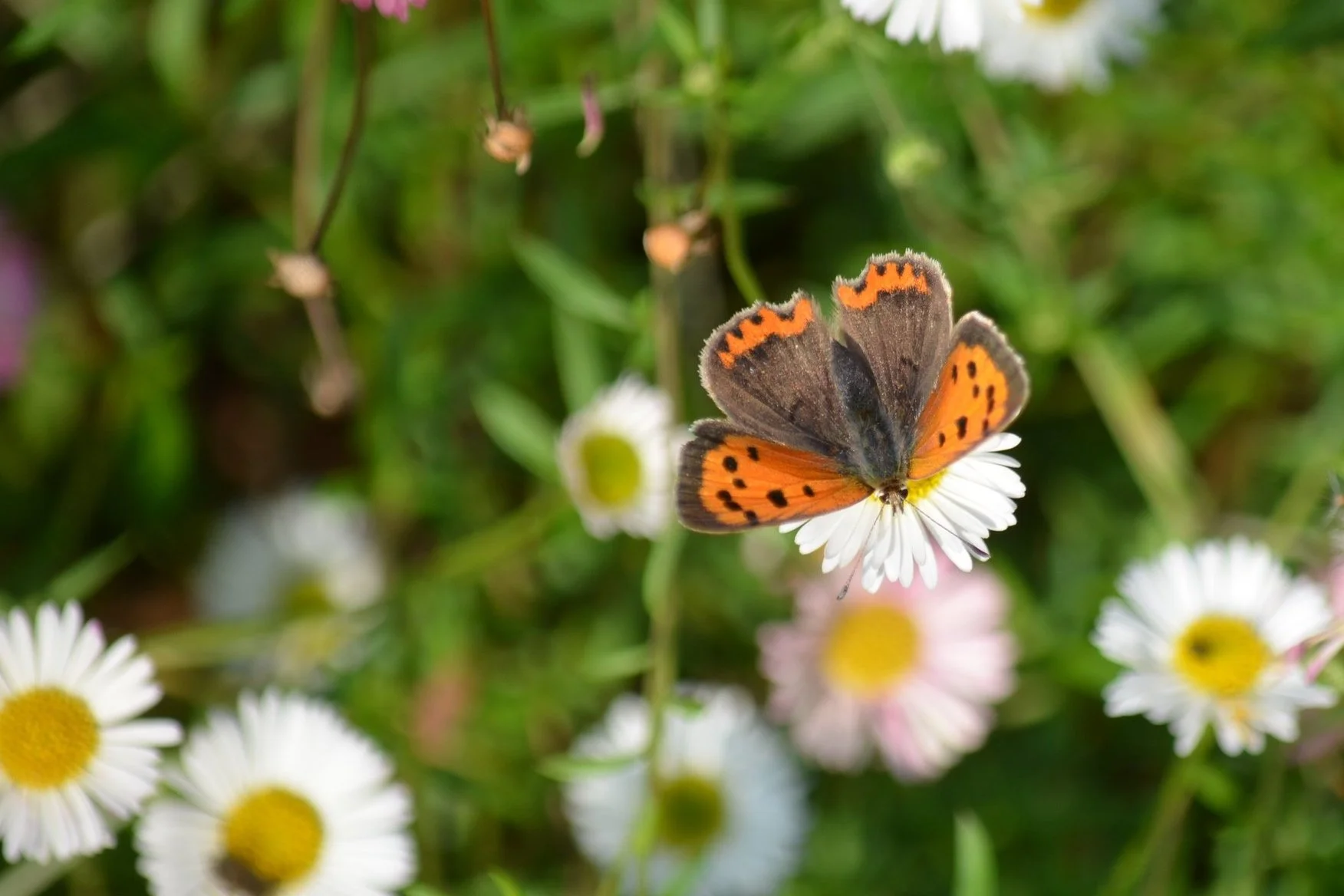
Small copper
Red Admiral
Ringlet
Purple hairstreak
Small skipper
Comma
Speckled Wood
Peacock
Moths:
Silver y
Hummingbird Hawkmoth
Cinnabar (caterpillars)
Yellowshell
Straw dot
Mint moth
Argyresthia goerdartella
Agriphilla straminella
Garden grass moth
White banded grass moth
Yponomeuta spp
Odonata:
Dragonflies:
Common hawker
Emperor dragonfly
Southern hawker
Brown Hawker
Common darter
Ruddy darter
Four spotted chaser
Damselflies:
Common blue
Azure
Emerald
Coleoptera:(Beetles, Ladybirds, weevils)
Red soldier beetle
Swollen thighed beetle (Odomera nobilis)
Seven spot ladybird
Ground Beetle spp
Odomera lurida
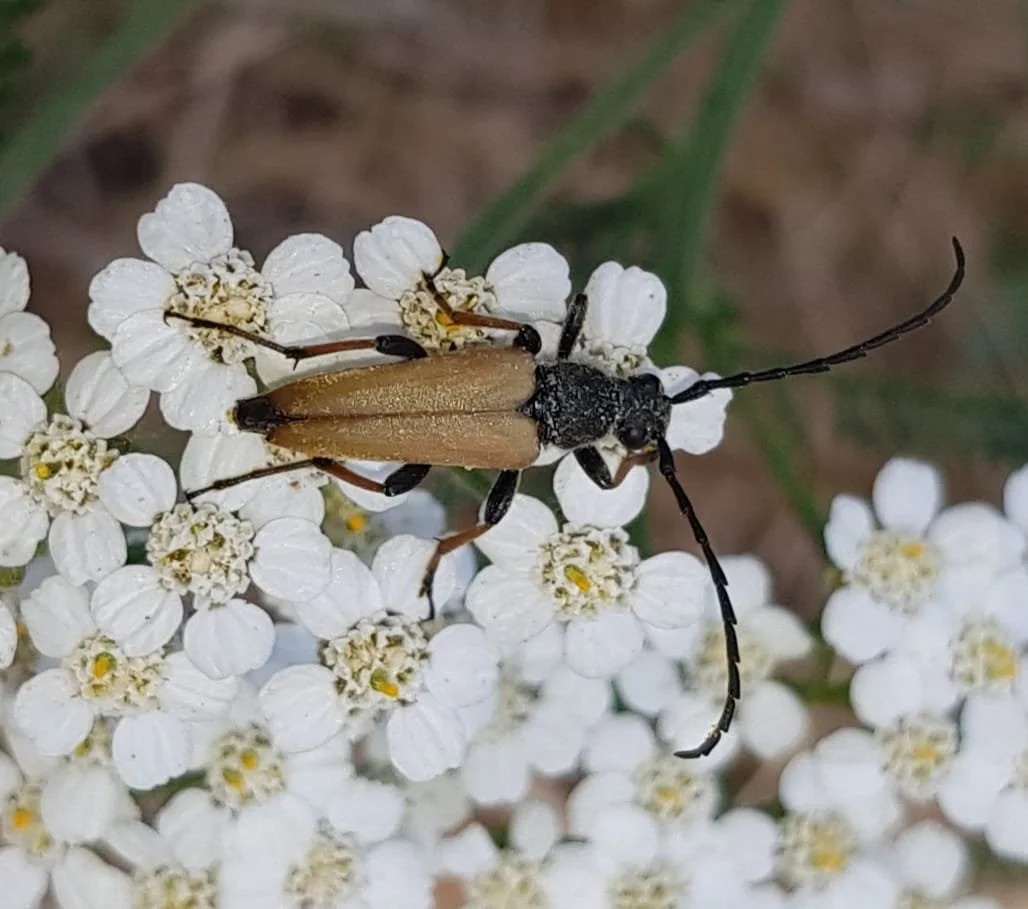
Tawny longhorn beetle - uncommon and found by Hayley!!
Tawny Longhorn Beetle (Corymbia fulva)
Hemiptera: (shieldbugs, froghoppers, leafhoppers aphids, planthoppers)
Tortoise shieldbug
Bishops mitre shieldbug
Green leaf hopper
Grass bug (Stenoderma laevigata)
Long legged plant bug (Phytocoris varipes)
Dock bug (early instar)
Hairy shieldbug
Plagiognathus arbustorum
Hemiptera (cont):
Cinnamon Bug.
Marsh damsel bug
Red legged shieldbug
Green shield bug
Liocoris tripustulatus (Common nettle bug)
Diptera: (hoverflies, fruit-flies, dung-flies, mosquitoes, midges, house-flies, bluebottles, horse-flies and crane-flies.)
Dark edged Bee fly
Hoverflies:
Rhingia campestris (Common snout hoverfly)
Myathropa flora (Batman overfly)
Volucella inanis (Wasp plume horn or Lesser Hornet Hoverfly)
Cheilosia spp
Eupeodes spp
Xylata segnis (orange belted leapwalker or orange belted hoverfly)
Eristalis arbustorum (Eurasian Drone Fly)
Eristalis tenax (Common Drone Fly)
Syritta pipiens (Compost hoverfly or thick-legged hoverfly)
Chrysotoxum bisinctum (Two banded spear horn)
Sphaerophoria spp (globe tails)
Marmalade hoverfly
True Flies:
Phania funesta
Calliphora spp (Bluebottle flies)
Musca autumnalis (Face fly)
Bellardia spp (Blow fly)
Phasia hemiptera (Bat winged phasia)
Rhinophora lepida
Tachina fera/magnicornis
Sarcophagi spp
Eriothrix rupamaculatus
Yellow dung fly
Brown Heath Robberfly
Morellia spp
Chaetorellia jaceae
Craneflies:
Nephrotoma flavipalpis (Tiger cranefly)
Neuroptera:(Green lacewings brown lacewings, antlions, owlflies, and mantidflies)
Common Green lacewing
Orthoptera: (Grasshoppers, locusts and crickets)
Brown grasshopper
Common Green grasshopper
Field grasshopper
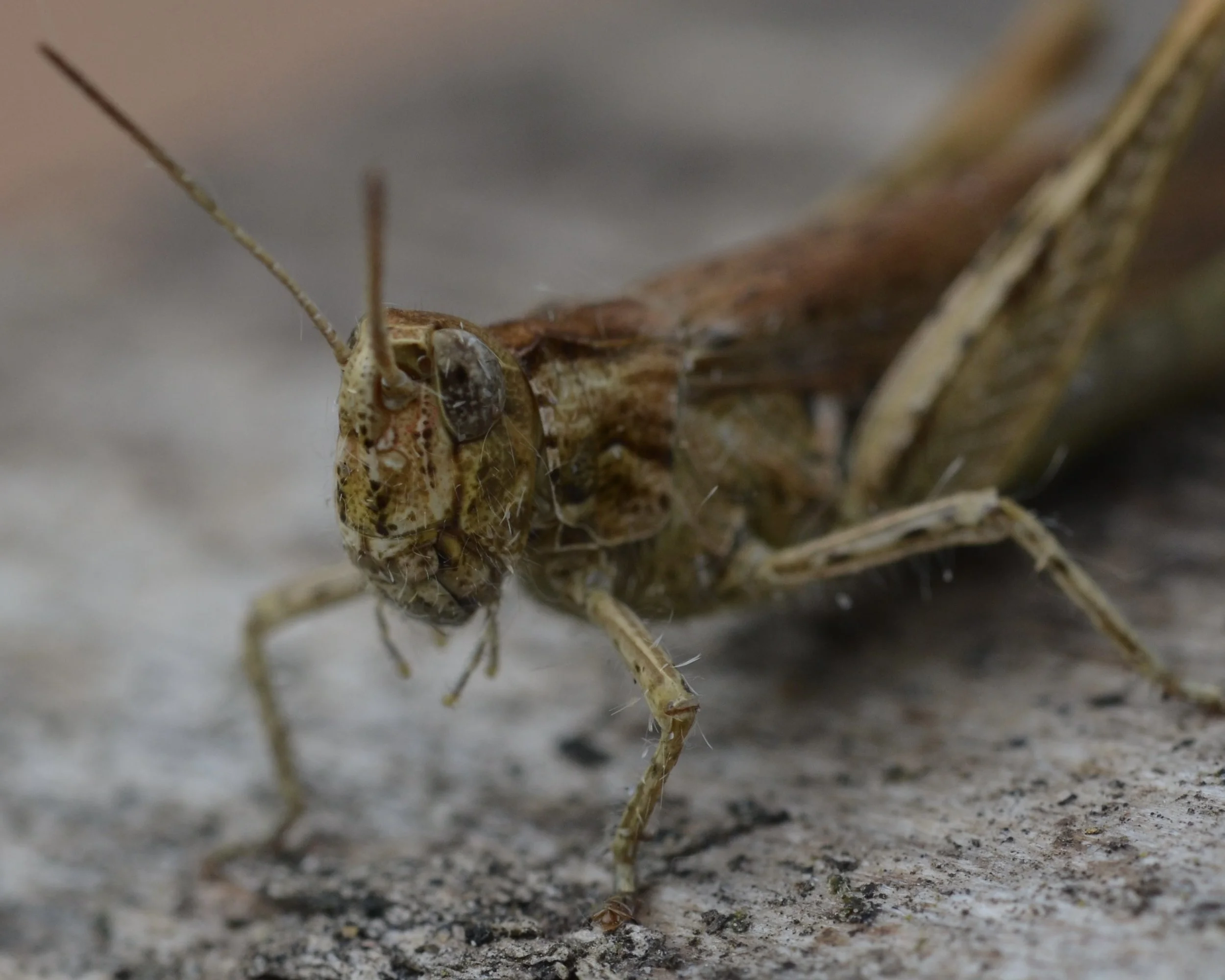
Field grasshopper
Aranaea: (spiders)
Garden spider
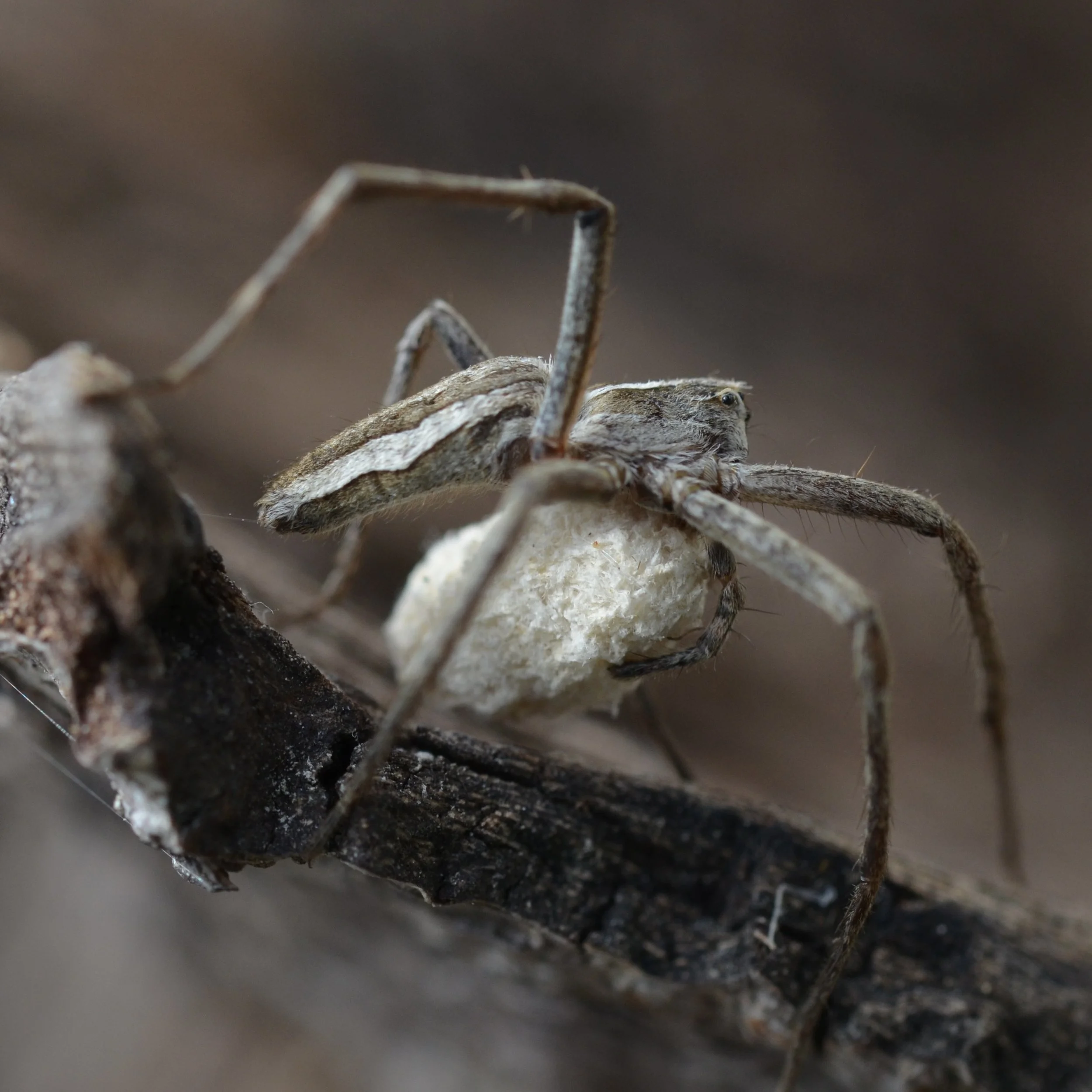
Nursery-web spider
Nursery web spider
Cucumber Green spider
Pond dip species:
Saucer Bug
Lesser water Boatman
Greater Water Boatman
Mayfly nymph
Damselfly nymph
Dragonfly nymph
Cased Caddis fly Larvae
Freshwater shrimp
Common Newt
Water mite
Five heatwaves and the driest period record have made this summer memorable.
The concern we have as we consider the post-heatwave summer is what the long-term effects will be on people and nature. Our bioblitz records have been fed into iRecord by Dr Linda. Someone may look back on them years to come and rue the loss of species we once saw as common.
To reflect on 2026 we are planning a mini-series of ‘Wilder Nottinghamshire’ podcasts on the theme of ‘Drier Nottinghamshire’ for release from the autumn 2026 looking at the impacts of the hot, dry summer, the steps we can take to make our gardens and communities more reslient and on the ‘bigger picture’ for us going forward.
Find ’Wilder Nottinghamshire’ wherever you find your favourite podcasts or visit the section within this website to jump on a shortcut.
Major thanks to Trev & Linda, Joy and Mike, Dr Linda (again, to her thanks for uploading all to iRecord) , Lynn and Hayley for their hard work and skill..