
… a big green hug ..
We created our cedar walk by felling a small commercial plantation of conifers.
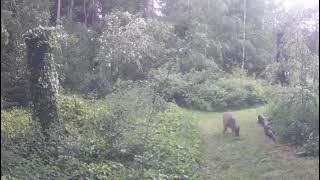
Male muntjac in the entrance to the cedar walk.
It was a dark, barren place with little in the way of understory,
Students from NTU Brackenhurst used the plantation for chainsaw training and we ripped out roots to build a stumpery.
Two magnificent Atlas blue cedars give this area of the garden its name.
We created log-edged paths with the help of family and friends.
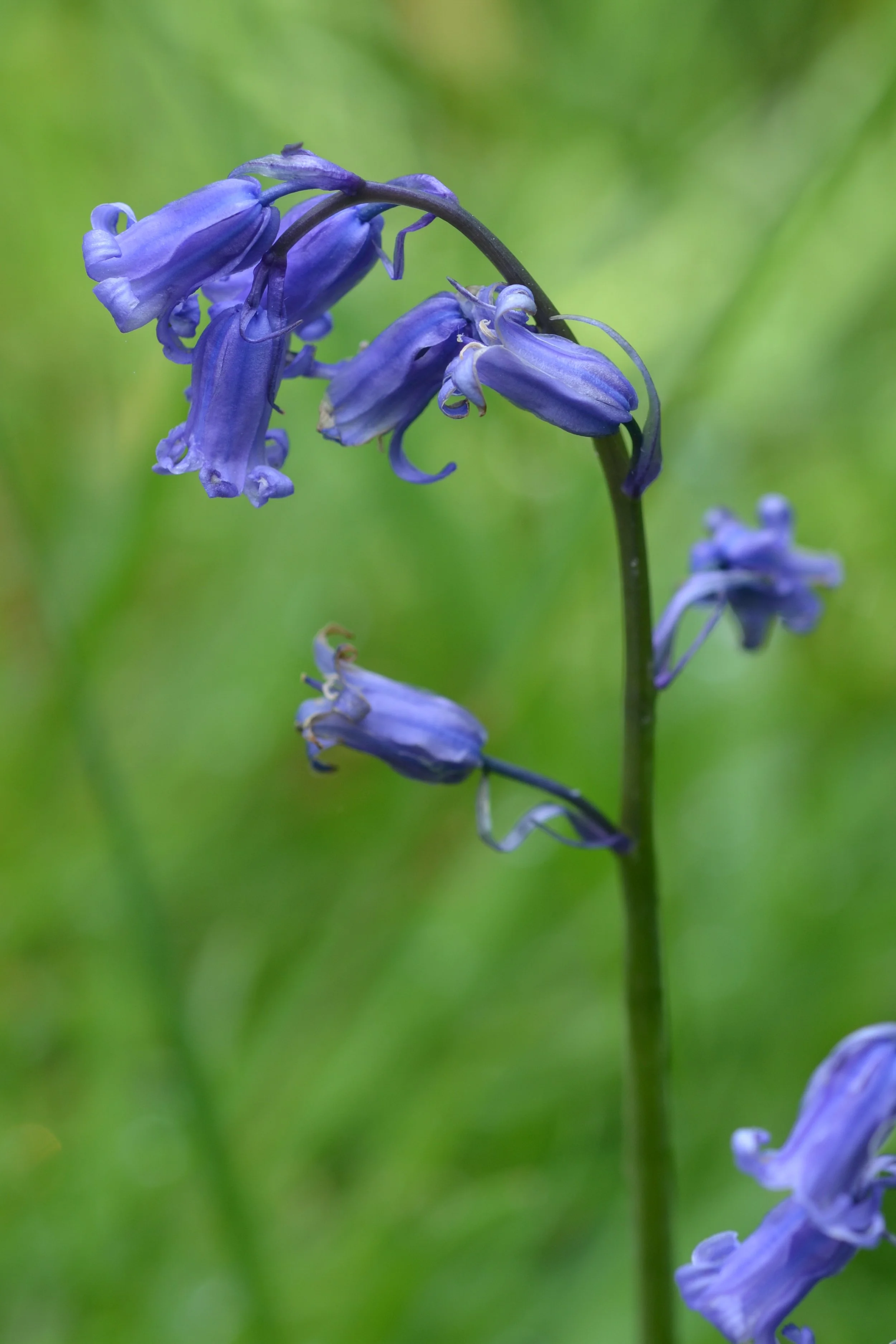
Bluebell
Native bluebells introduced into the garden are spreading.
Mother Nature then took over. They say that ‘the thorn is the mother of the oak’- thorny plants provide protection for seedling trees from grazing deer. Fourteen years on and the place is a delight.
Some conifers remain and several now have bat boxes.
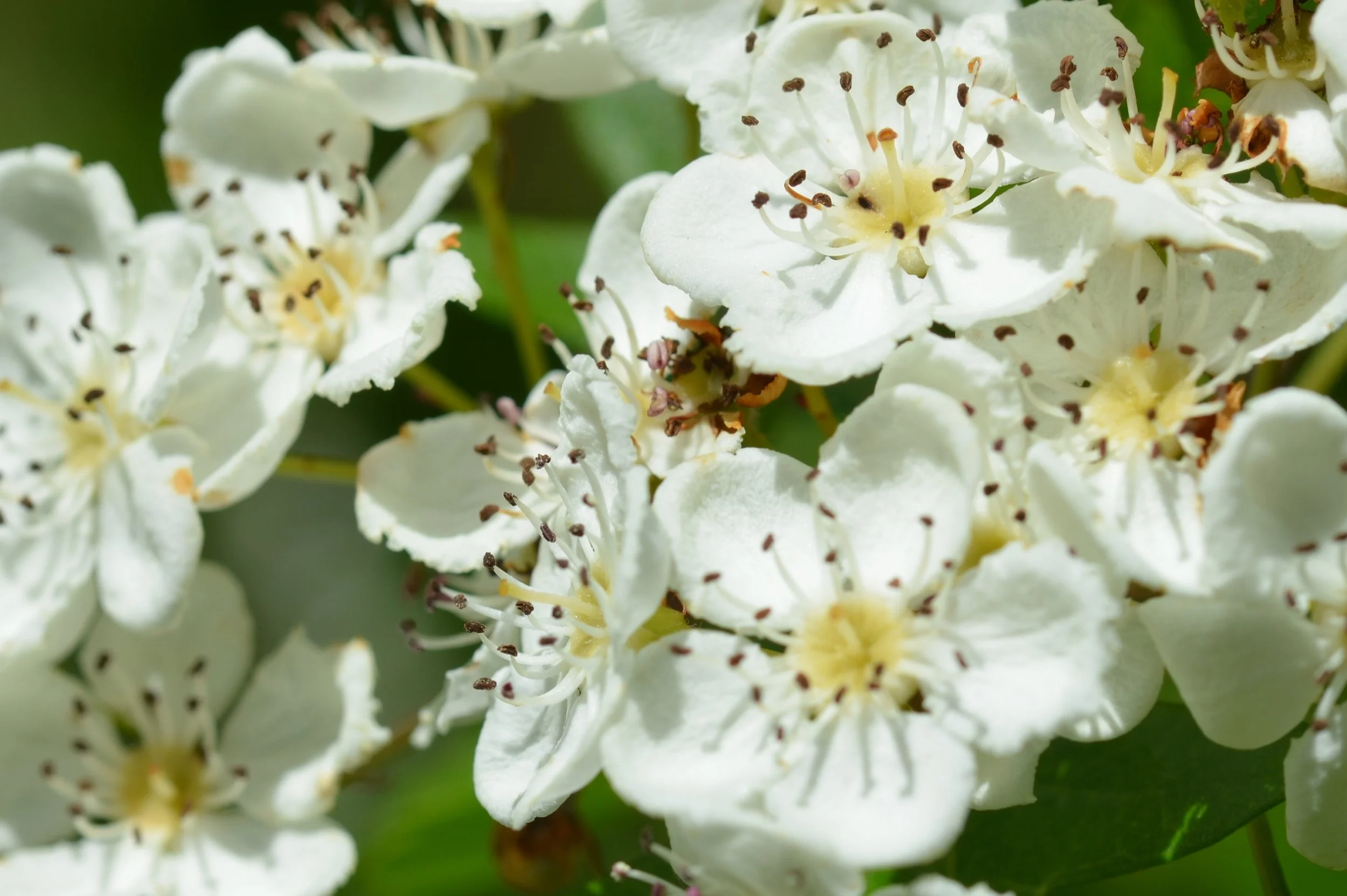
Hawthorn
Provides flowers for nectar and pollen; nest sites; berries; and the foliage is welcome food for a range of caterpillars.
We’ve created many metres of dead hedges.
Rowan, silver birch, field maple, oak, holly, hawthorn, goat willow, wild cherry now flourish.
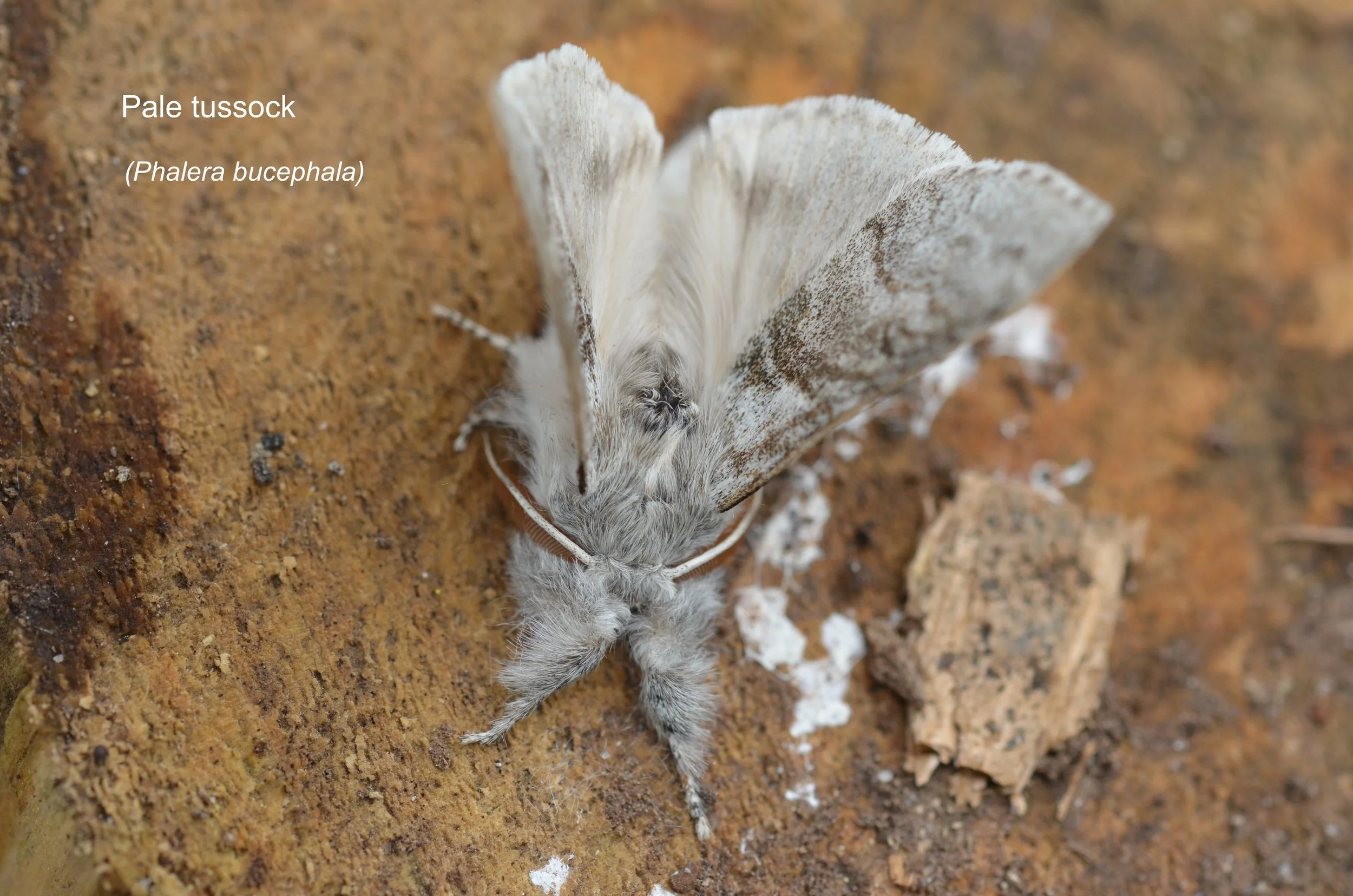
The fluffy pale tussock moth caterpillars feed on a host of broadleaf trees and shrubs, including blackthorn, hawthorns, oaks, hazel, crab apple, and birches.
Elder, yew, gelder rose, dog rose and honeysuckle are included in the understory.
Bluebells and primrose are establishing well. We scattered red campion and foxglove seeds and these have naturalised well on path edges.
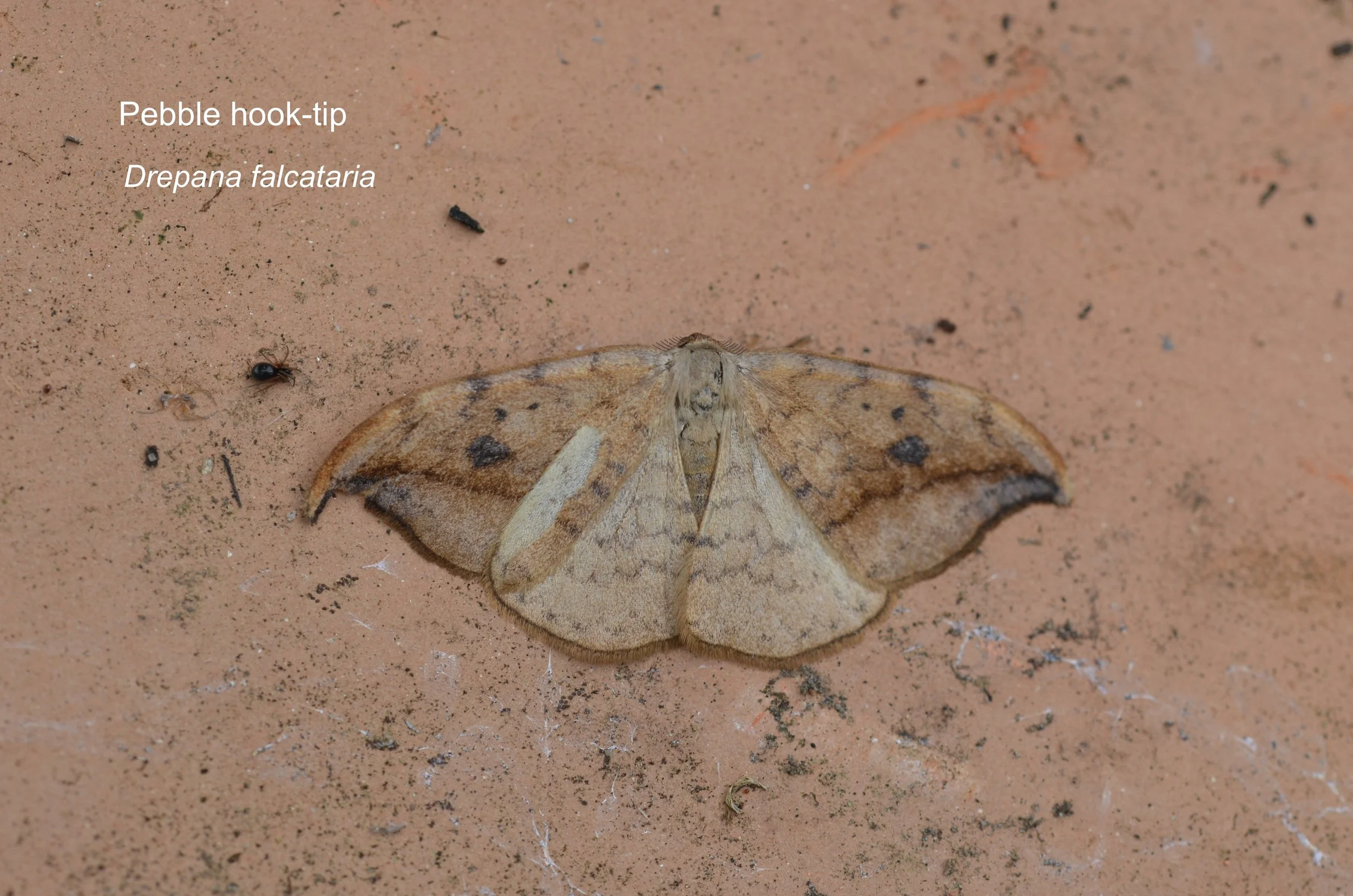
Pebble hook-tip caterpillars feed primarily on birch..
Ivy is flourishing in one area: ‘the ivy sea’. Eventually holly balls will be tossed on the ivy waves..!
We’ve ensured that there is standing deadwood..
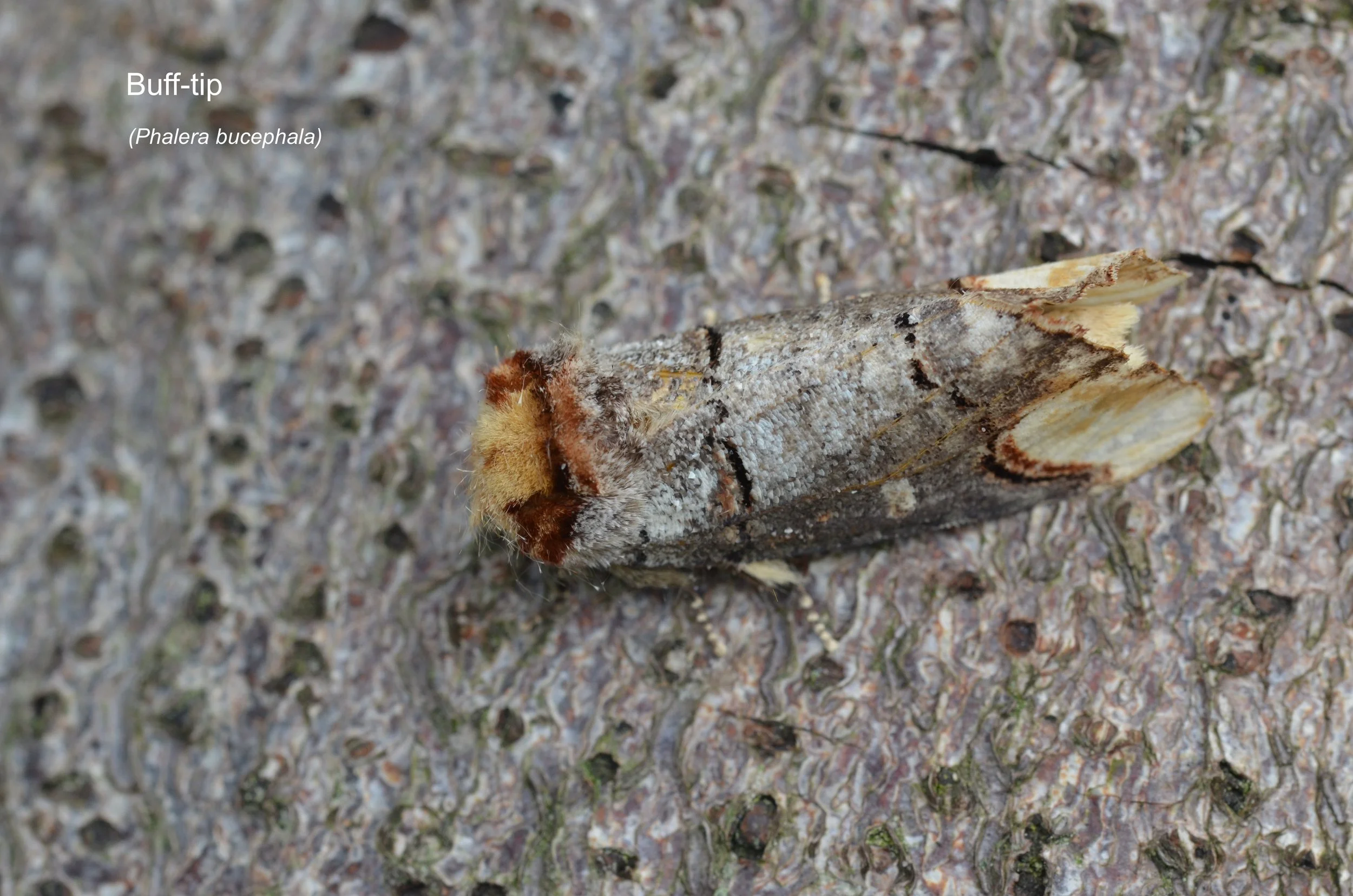
The buff-tip moth is surely one of our best camouflaged moth - looking just like a twig. Its’ caterpillars feed on the leaves of deciduous trees like oak, birch, and lime.
The area now gives you a big green hug. This year, by day, a willow warbler has blessed us with his song. A song thrush sings exuberantly at dawn and dusk. The evening is punctured by a juvenile tawny owl’s call.
Muntjac, fox and an occasional badger call this home. Sadly, only very rarely do we see hedgehogs.
Last night I set up the moth light and attracted 85 moths of twenty two species as well as cockchafers, cadis flies and ichneumon wasps. No rare moths, although the seraphim is described as ‘local’ and we hadn’t recorded that species here before.
Blessed.