
Time for the bean business..
A male willow warbler continues to trickle his cascading song around the vegetable garden as I work. They’re blue-tit sized migrants from sub-Saharan Africa. Although in the past we’ve had males singing while passing through, this is our first to stay. A joy.
Willow warbler numbers are in decline and they are steadily moving their range north due to climate change. They are orange-listed birds of conservation concern in the UK.
The pleasure of a much-needed big mug of tea was disturbed by a male sparrowhawk. He’d taken a juvenile blackbird in the woodland garden and his prey was struggling a little over two metres away on the ground. He gave me a ‘Do you want to make something of it?’ stare and so the mug and I retreated.
To work…
For our health and the planet we’re exhorted to eat less meat and more legumes.
Farmer and writer James Rebanks says that ‘The single best thing you can do for the planet is to become an active participant in your local food system’.
So, let’s get active growing our own beans- it’s fun and easy.
We’ve collected a few different varieties of climbing French beans over the years and kept their seeds, supplemented with new old varieties from the Garden Organic Heritage Seed Library (H).
Our 2026 varieties:
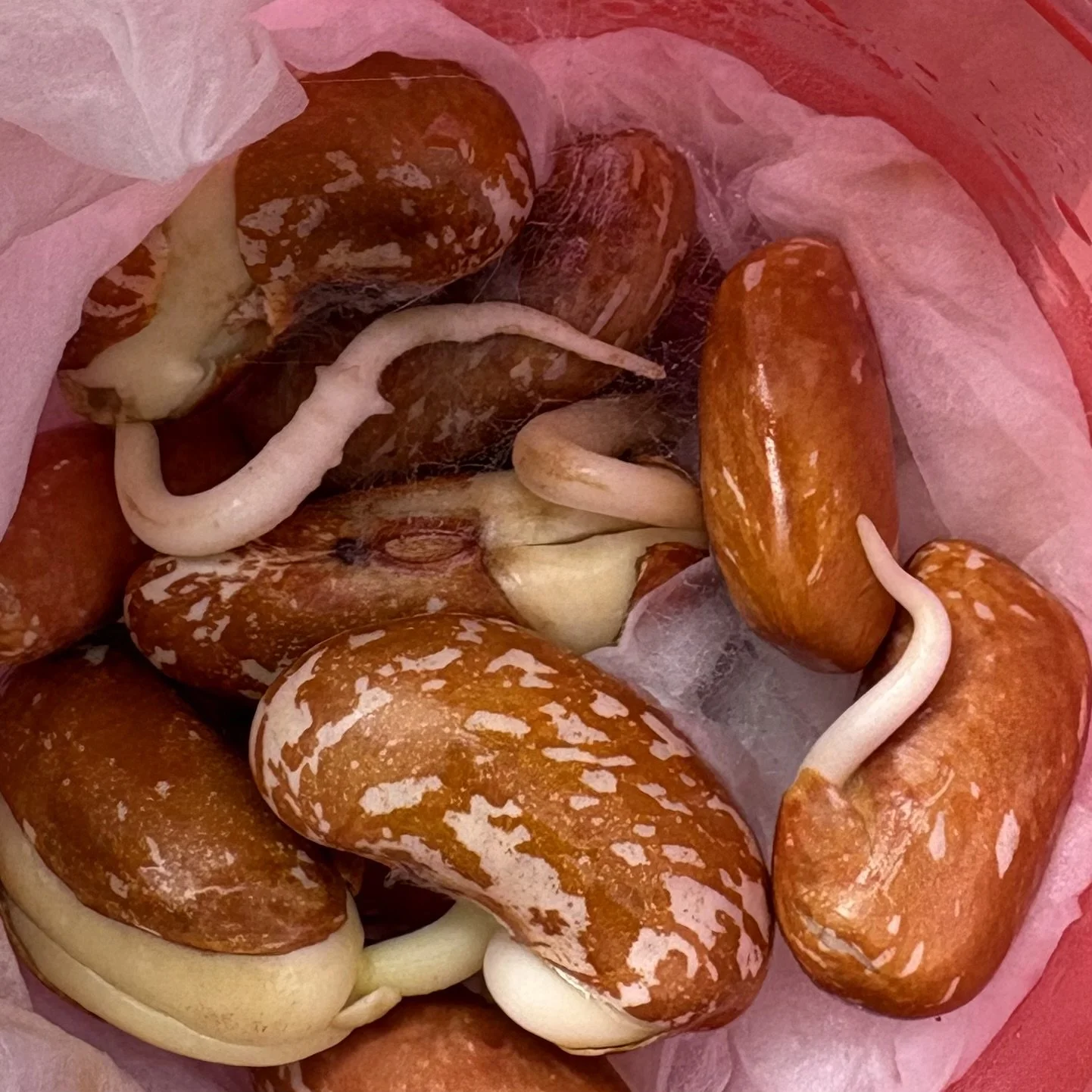
Coiled radicles
of ‘Caseknife’ climbing French bean.. A heritage variety from Garden Organic Heritage Seed Library.
Caseknife (Own collected)
George’s (H)
Borlotti (Own collected)
Greasy (H)
Czar (Own collected)
Brown bean? (Own collected 2024)
Cobra (Own collected)
Coopers pea bean (Own collected)
Bob & Mary (H)
Hewitt (H)
Bonne Bouche (H)
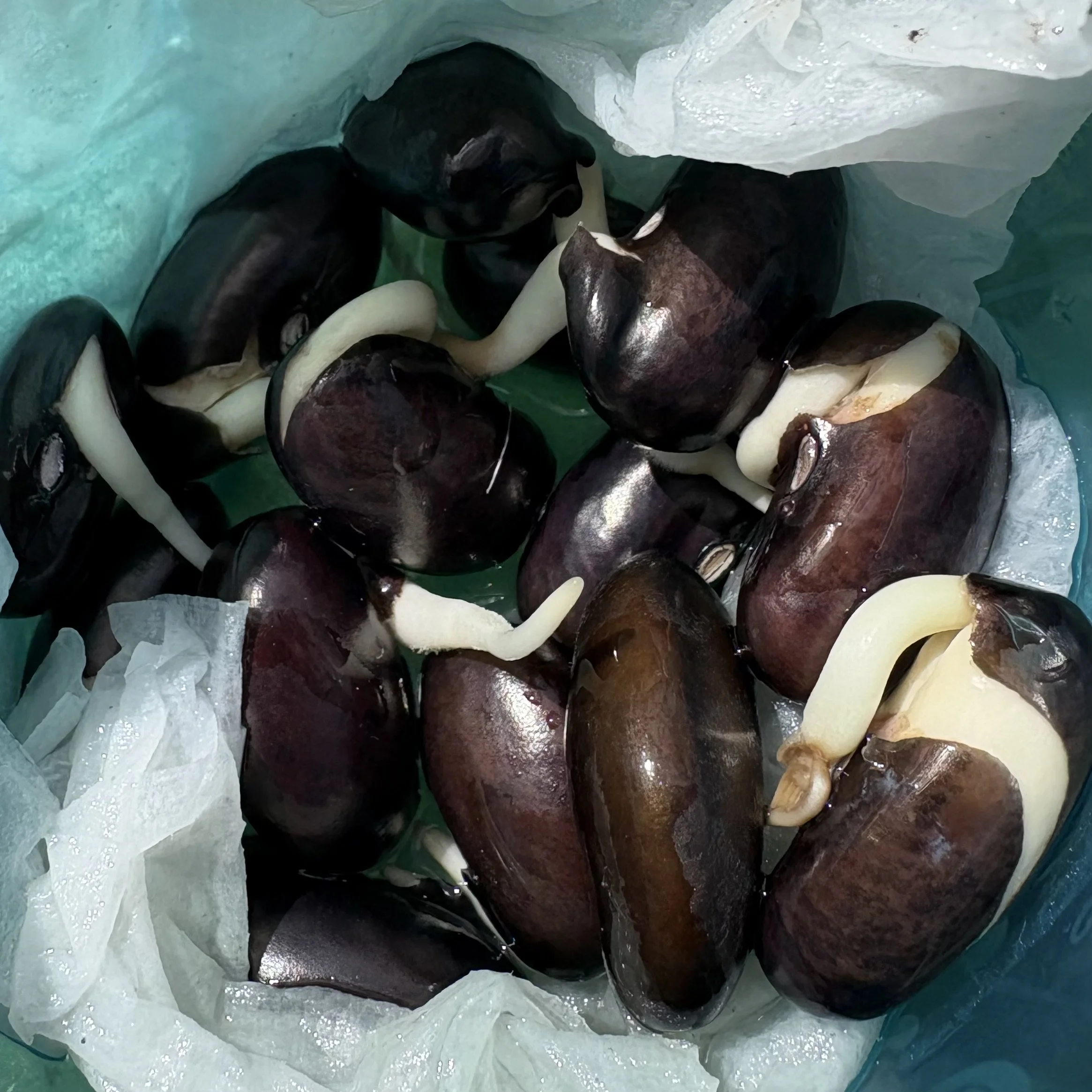
‘Cobra’ climbing French bean
In their dried form they can be stored for a couple of years or more. And some are quite pretty. This year’s ‘George’ looks as though the top of each little bean has been dipped in white chocolate. Borlotti beans look like a small birds eggs.
Some are a little eccentric - Coopers pea bean seems to be having an identity crisis not knowing which member of the legume family it belongs to. It ain’t pretty and I haven’t given it the taste test yet.
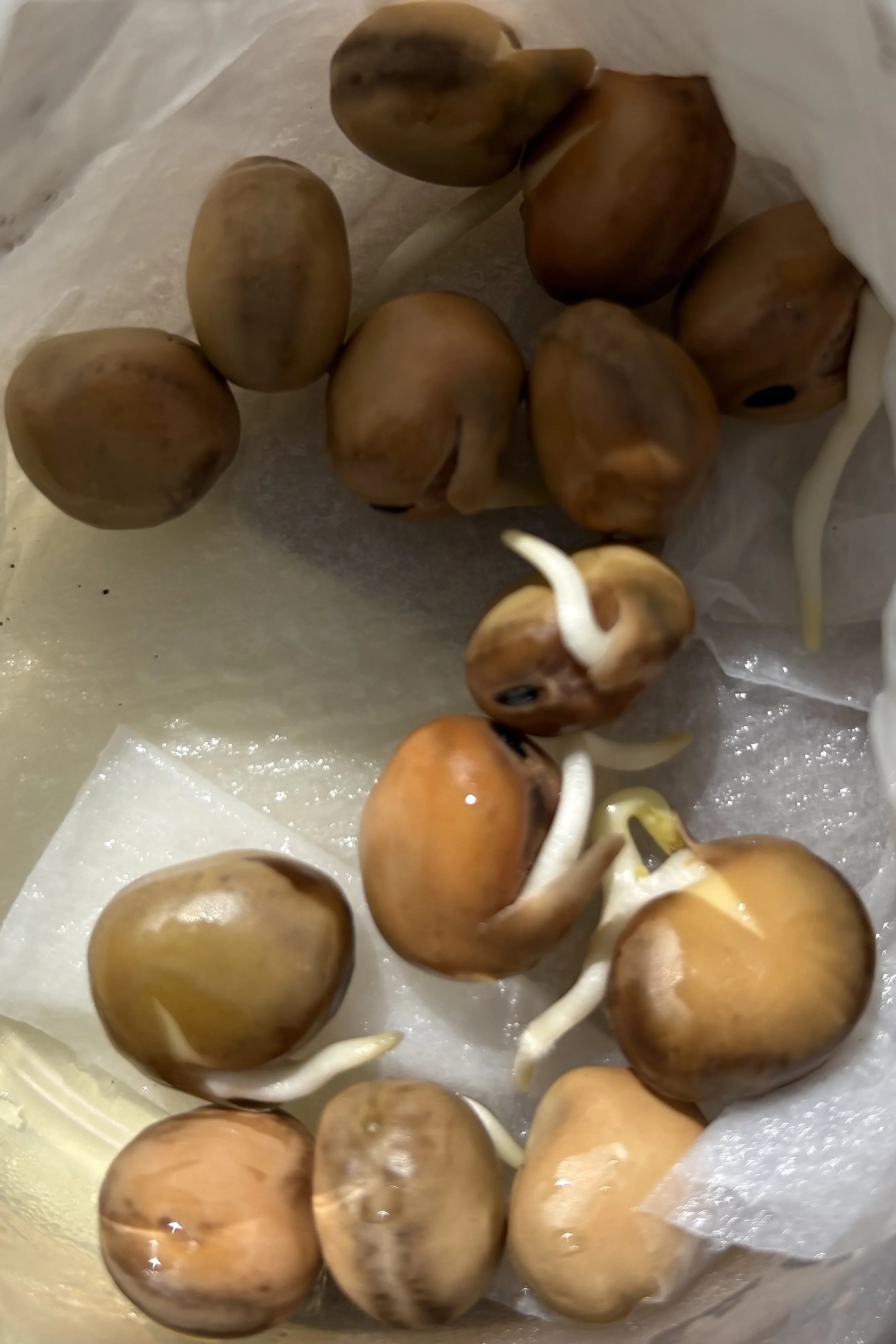
Identity crisis
for Coopers Pea Bean.. Is it a pea of a bean? Another Heritage Seed Library variety..
I’ve had most success germinating beans by placing the dried beans between sheets of dampened kitchen roll, kept at room temperature, covered so they don’t dry out and kept dark. Watch ‘em though. Or sniff ‘em. Those that don’t send out a radicle (the long root thing) will rot very quickly, affecting others.
Within a week the good ‘uns will have sprouted their radicle, then you can plant them out into modules using peat-free compost. We place ours in the greenhouse. Frost and low temperatures kill beans so they do need a little tlc until they’re robust enough to be planted out.
More next time including bean frames and my ever-so-tasty bean cassoulet recipe…