
Inching forwards
Mum passed away on Thursday. She had suffered from dementia for a number of years and was approaching her 97th birthday. Although mum had been poorly for a while, witnessing her departure was as tough on us all as you would have guessed.
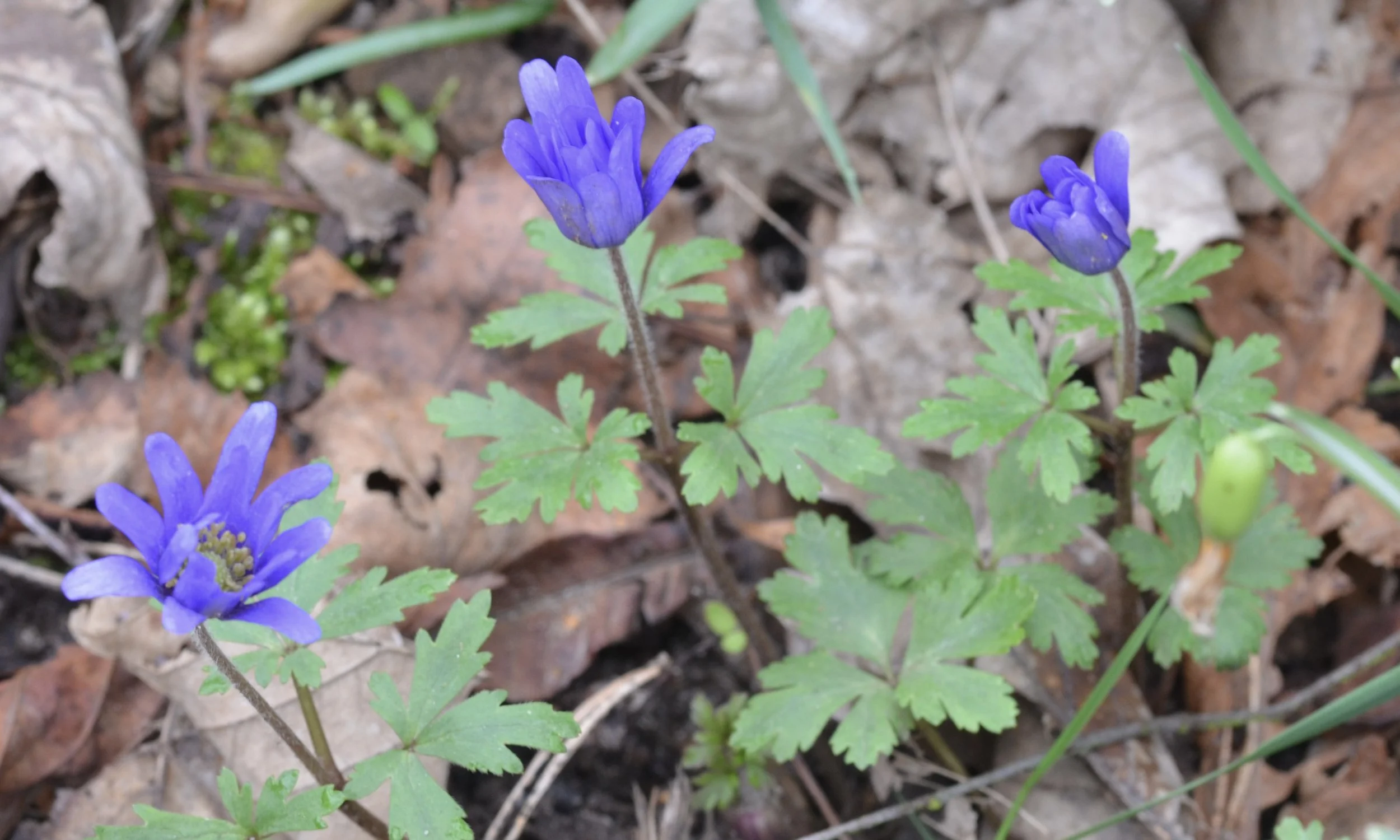
Anemone ‘Blanda’ in the woodland garden.
Losing mum for me was an energy-sapping emotional gut punch which has subsequently seen me eating my granddaughters chocolate bars and finally resorting to Tesco cooking chocolate in an attempt to rebuild my energy.
What changes mum’s life witnessed - from collecting shrapnel on the way to school as a girl, to dancing on the stage in London, to raising a family and so much more. A life well-lived and a great loss to us.
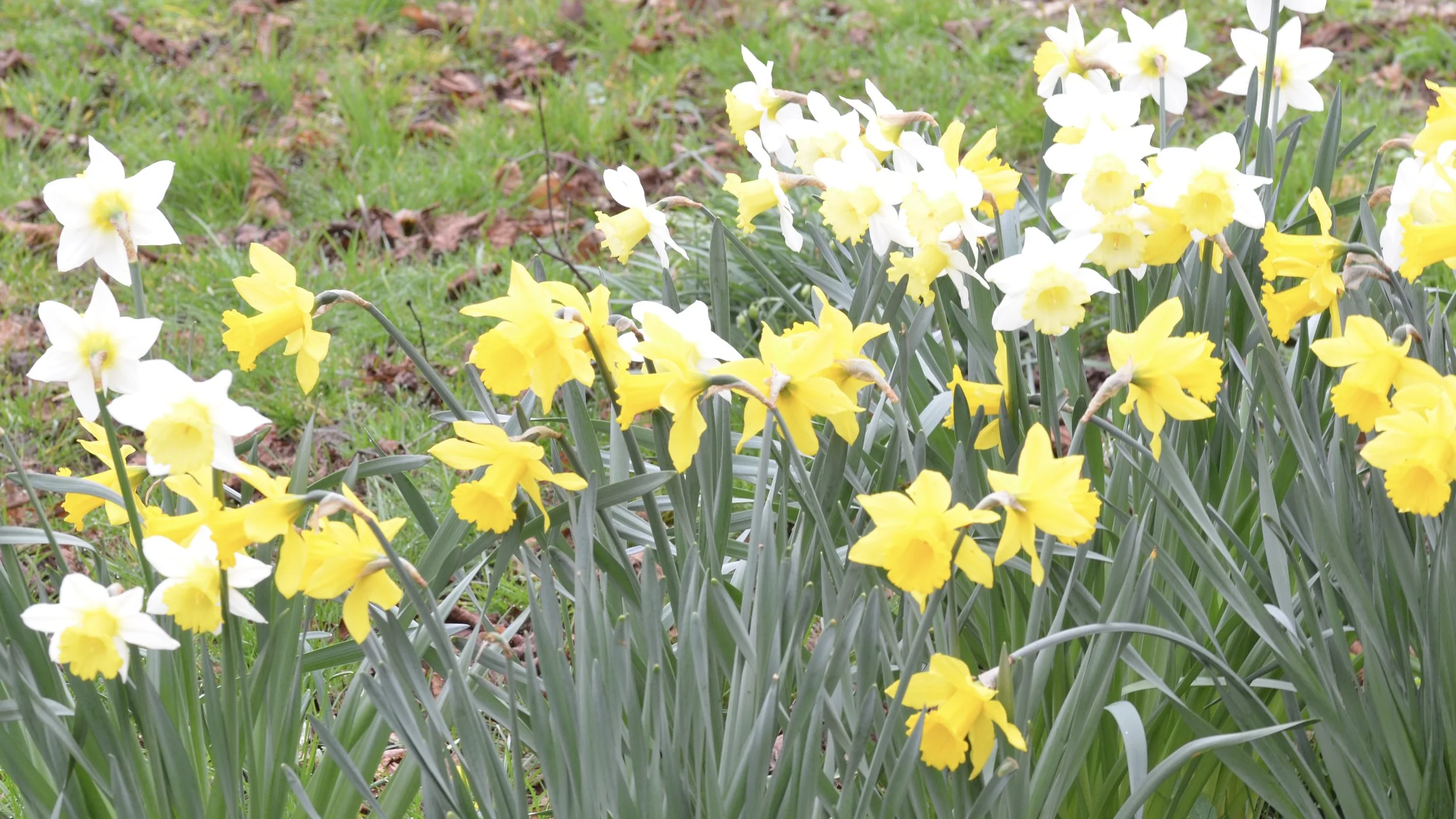
Narcissus ‘Rheinfeldt’s Early sensation’ now joined by the paler ‘Finland’ in early spring bloom.
And what changes have there been in depauperated nature too during those 97 years. Mum was never a gardener and struggled to understand such things as weedy unmown lawns. Dad was a weed & feed, mown straight lines kinda gardener. I asked her once what she thought of the lawn and she said ‘Bloody awful’. I think they would have both been unimpressed by my pleasure in the vole colony that colonised part of the lawn. Here we work on a very small scale to stand against the tide.
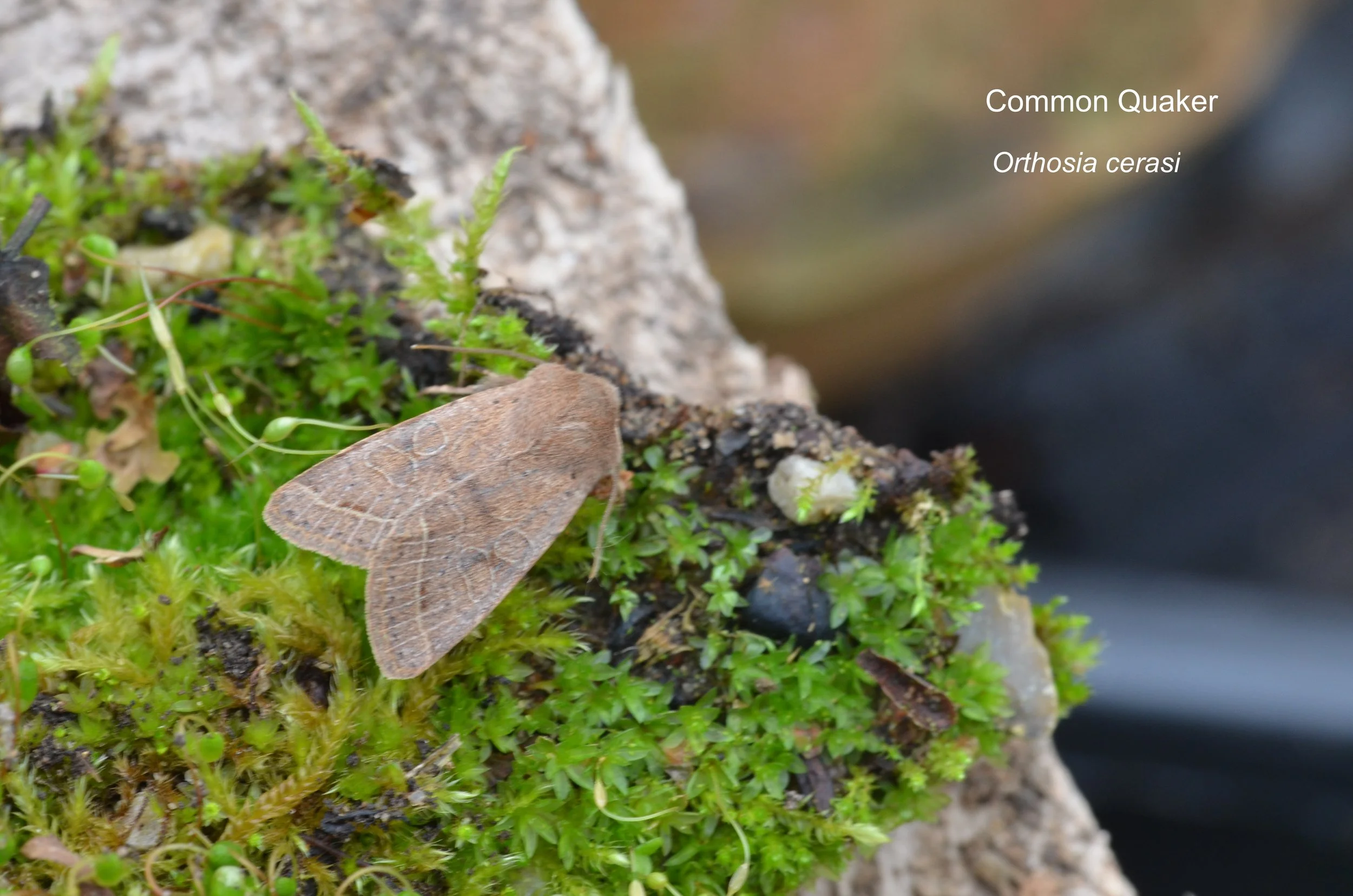
Common Quaker moth
The calendar of the year is demarcated by seasonal moth species. 270 moths of ten species attracted to the mercury vapour light yesterday. Mostly small and common Quakers. Their caterpillars feed on a wide range of broadleaved trees, including Oaks (Quercus), Sallows (Salix), Birches (Betula), Hawthorns (Crataegus), Sweet Chestnut (Castanea sativa) and Hazel (Corylus) all of which grow with us. Both moths overwinter as a pupa, typically found in a cocoon within loose soil or leaf litter near the base of host trees. Both in pupae form and on-the-wing they must prove a welcome protein-source at this time of year for bats and terrestrial insectivorous mammals as well as ground feeding birds. Good reason to leave those fallen leaves alone.
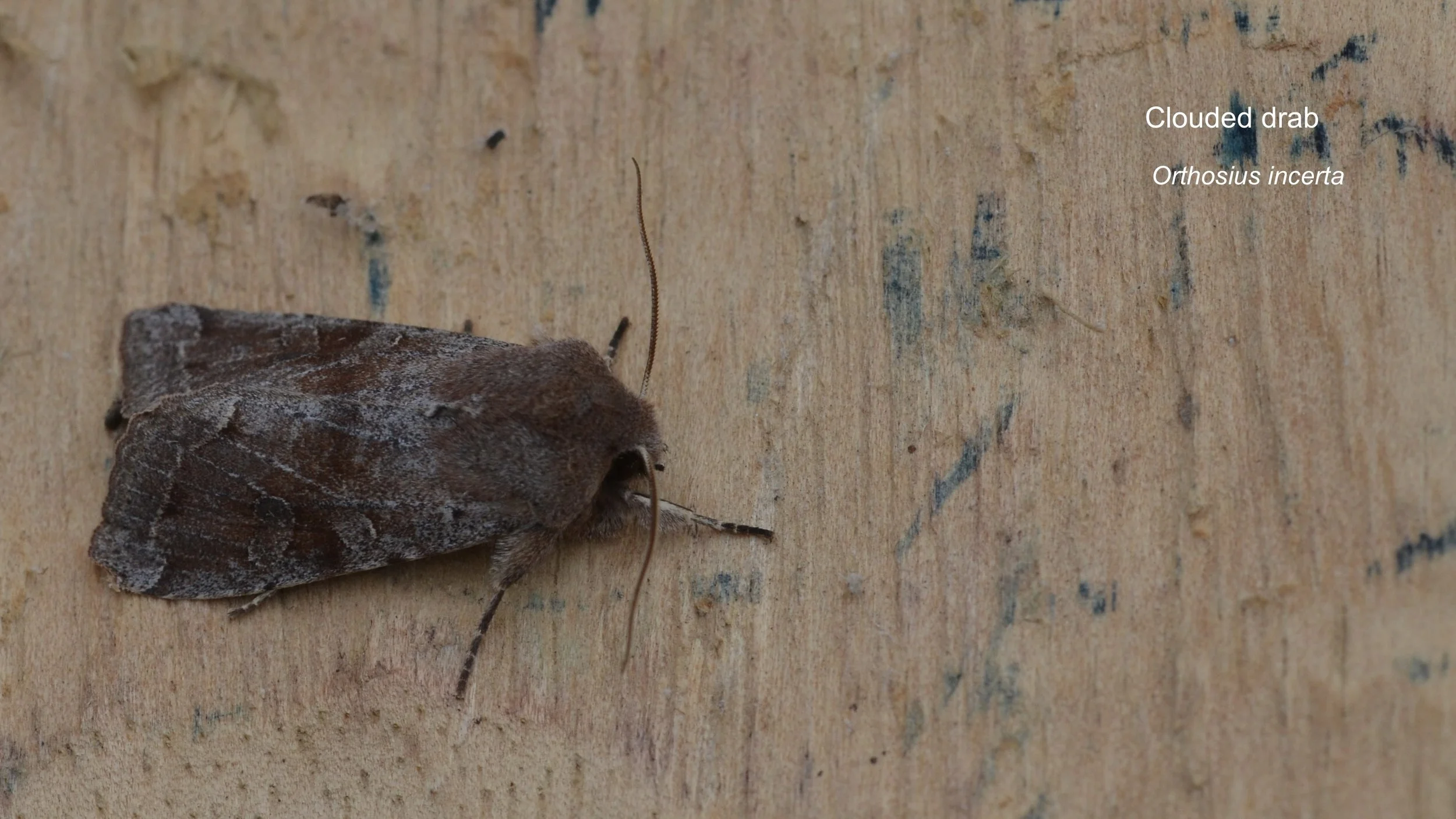
Clouded drab moth.
A raven flew low above the garden yesterday- was it prospecting above ‘the eagle’s nest’? Always such impressive birds. Ink black. Absent from most of county for most of my parents’ lives.
Our first singing chiffchaff of the year (chip-chop chip-chop) has announced its arrival. Probably all the way from its wintering grounds in southern Europe or Northern Africa. Welcome back little friend. One arrived around this time last year. Other years had seen later chiffchaff arrivals.
Eight lapwings were in crazy courtship display over the fields this morning.
Male toads chirrup in George’s Pond. The bigger females haven’t joined them yet. On the lane the toad migration has begun. Members of Notts Amphibian and Reptile Research Group guide the little animals over. The lane is increasingly busy with vehicles. Common toads have used this crossing for many years but now find themselves listed as species of conservation concern in the county.
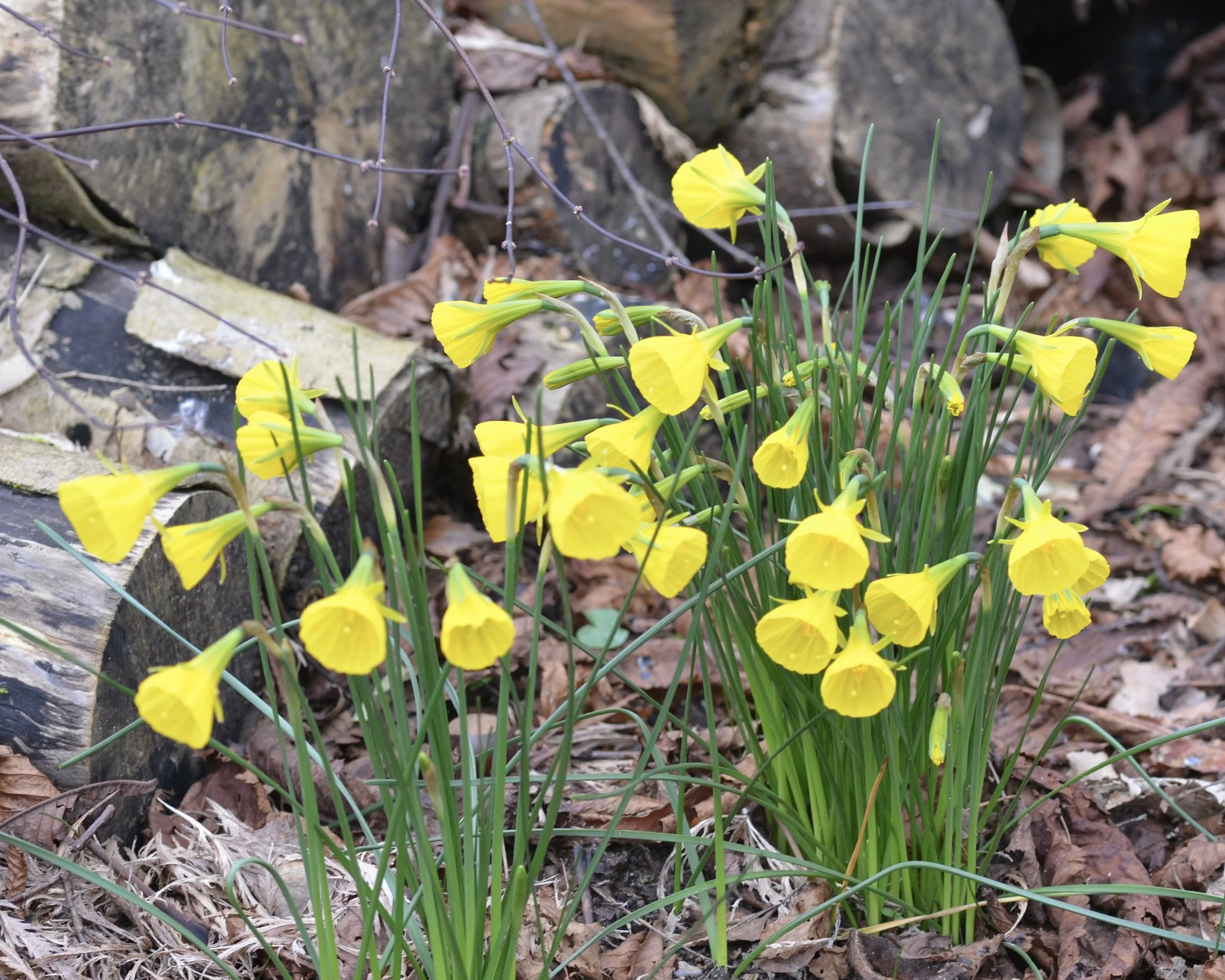
Narcissus bulbacodium ‘Golden Bells’
Yesterday was dry and so gave me chance for the first lawn cut of the season. A mighty one too with enough cuttings to fill a builder’s tonne bag. All cuttings are now safely tucked up, their vibrant green layered with brown unfinished compost. Temperature at the beginning of the process was 11C. It will accelerate, hopefully killing weeds and pathogens as it reaches 60C.
Snowdrops have finished flowering and their seed heads swell. In their place cultivated daffodils spill all shades of yellow over the grass.
Queen bumblebees nose into flowers. Our feral honey bee colony appears to have been badly depleted. Only single bees seen.
Jill spent a productive day sowing our vegetable seeds in our own peat-free and organic compost, We’re hoping for a 2026 as productive as 2025. We collected over 200kgs of food from the vegetable garden last year. Our first cut of current season purple sprouting brocolli today.
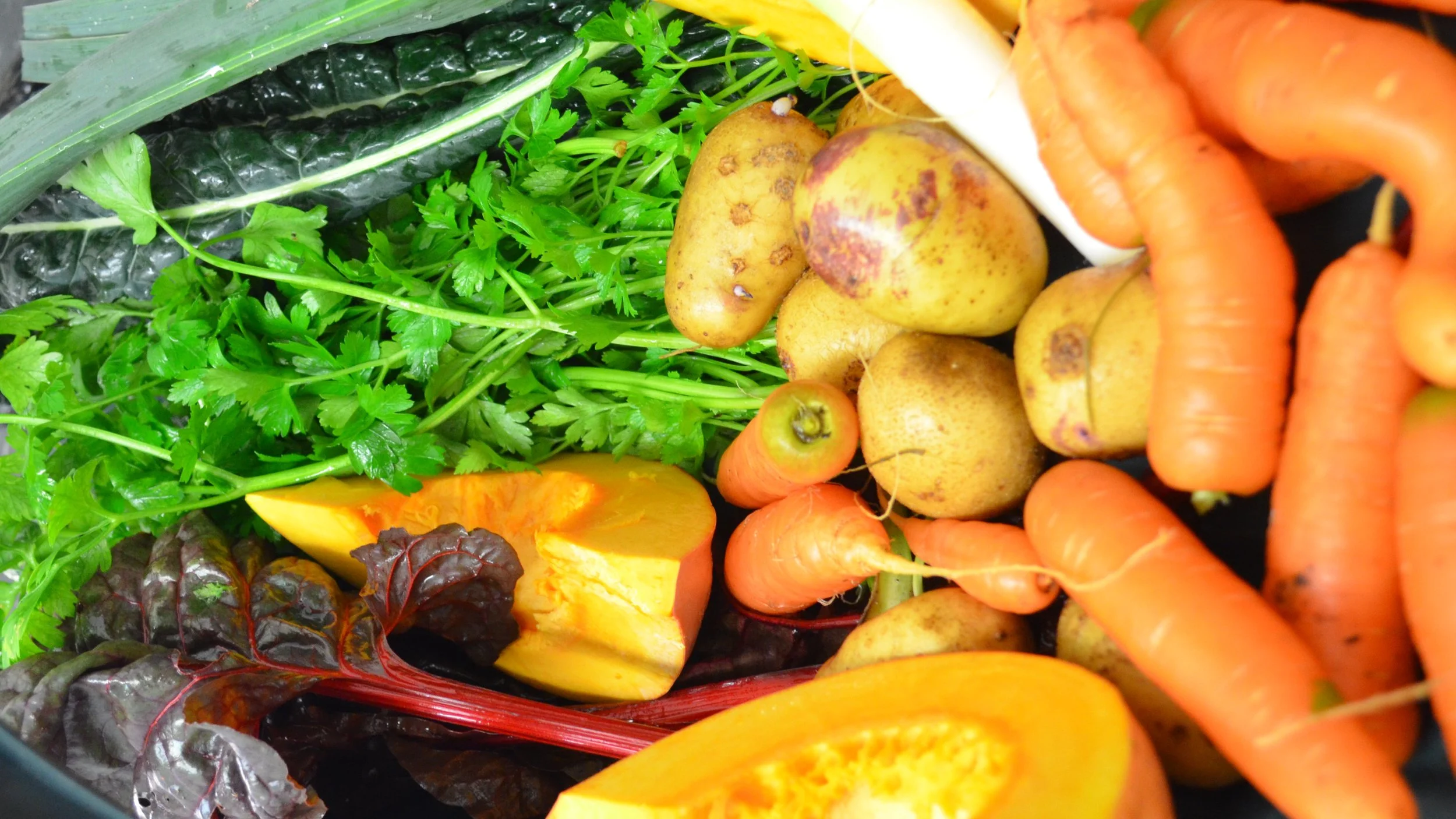
Some of the 2025 harvest,
We are inching towards launching the ‘Wilder Nottinghamshire’ podcasts.